
- Home
- Health Center
- Health Info
- Types of Acne Scars and Treatments: What Works?
Types of Acne Scars and Treatments: What Works?
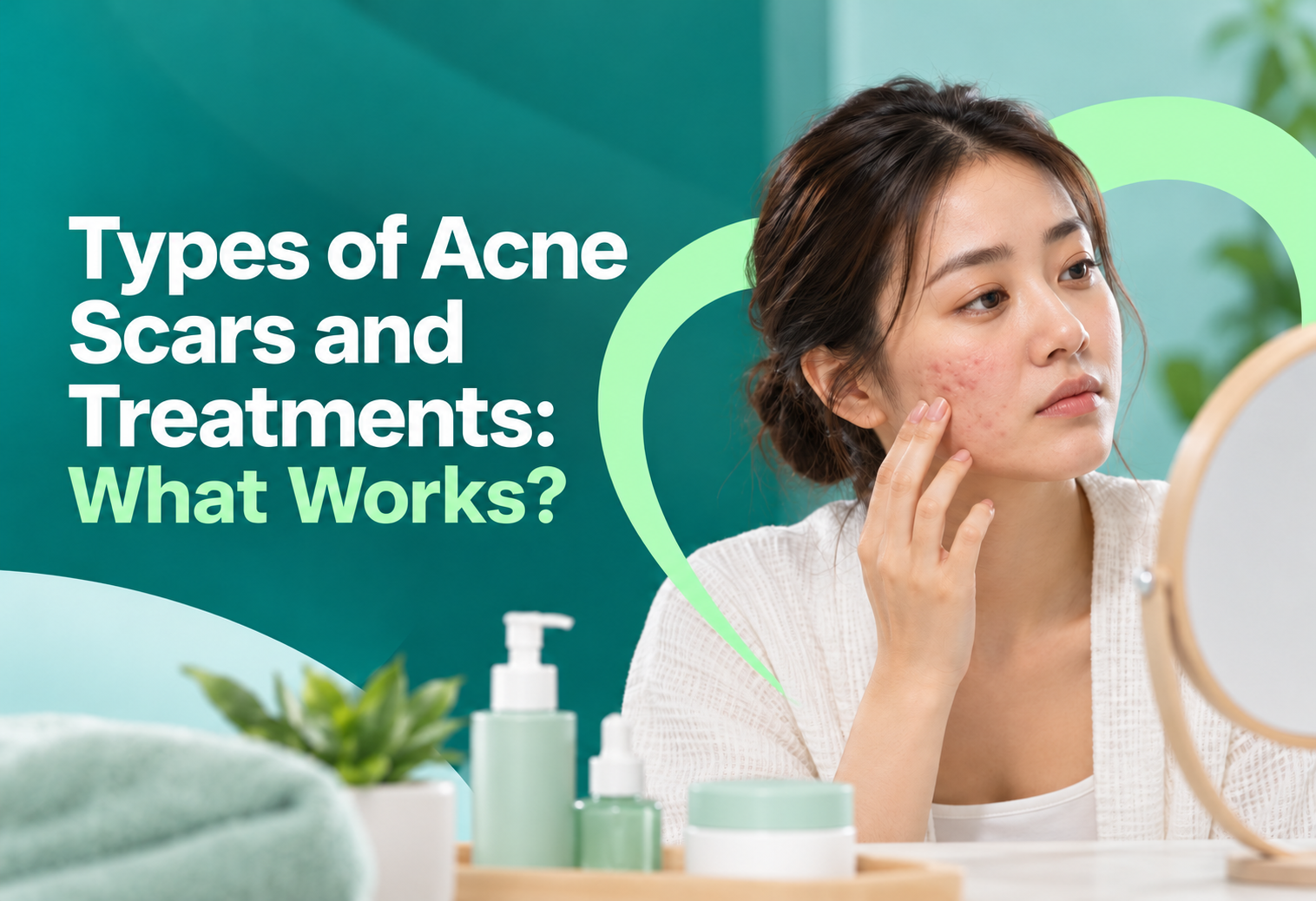
Acne can leave different types of scars. Most are atrophic (depressed) scars, which include ice-pick, boxcar and rolling scars, while hypertrophic scars and keloids are less common. [1, 2, 7] Not all marks left by acne are scars; some are changes in skin pigmentation that may gradually fade over time. [7, 8] Treatment approaches vary depending on the type and severity of scarring. Certain topical treatments may help make mild scars less noticeable, while other scars may benefit from dermatologist-directed procedures. [9] For post-acne pigmentation, suitable skincare products and sun protection may help improve dark spots. [14] Managing active acne early and avoiding picking or squeezing pimples can help reduce the risk of further scarring. [8, 11]
Acne scars may develop when inflammation damages the skin and affects its natural healing process. [7] Picking or squeezing pimples can worsen inflammation and increase the likelihood of scarring. [7, 8] However, not every mark left after acne is a scar. Some are temporary changes in skin colour, while actual acne scars may require different treatment approaches depending on their characteristics. [7, 8]
Identifying the type of acne scar is important because different scars may require different treatment approaches. For example, an ice-pick scar or keloid may require a different approach from post-acne pigmentation, which affects skin colour rather than its structure. [7, 9]
Are acne scars and acne marks the same?
No. A true acne scar changes in the skin’s structure, which may appear as indentations or thicker scar tissue. [7, 8] In contrast, flat marks left after acne may be due to post-inflammatory hyperpigmentation (PIH) or post-inflammatory erythema, which affect skin colour rather than its structure. [7, 12] These colour changes may improve gradually, whereas acne scars tend to be longer-lasting. [7, 8]
What causes acne scars?
Acne scars can develop when inflammation damages the skin and disrupts its natural healing process. Changes in collagen during healing may result in atrophic scars, hypertrophic scars or keloids. [7]
Several factors can increase the likelihood of acne scarring:
- Acne severity: Scarring is more common in people with moderate-to-severe acne, particularly certain inflammatory forms of acne. [7]
- Picking or squeezing pimples: These habits can further damage the skin and increase the risk of scarring. [3, 7, 8]
- Individual susceptibility: Some individuals may be more prone to developing acne scars than others. [7]
Treating acne early and managing ongoing breakouts can help reduce the risk of further scarring. [7, 8, 10]
What are the main types of acne scars?
Acne scars are commonly categorised as atrophic scars, which include ice-pick, boxcar and rolling scars. Other less common forms include hypertrophic scars and keloids. [7]
What are atrophic or depressed acne scars?
Atrophic scars are indentations in the skin that develop when inflammation leads to collagen loss during healing. They are the most common form of acne scarring. [7]
- Ice-pick scars: Small, narrow and deep indentations that extend into the deeper layers of the skin. [7]
- Boxcar scars: Round or oval depressions with clearly defined edges. They can vary in depth. [2, 7]
- Rolling scars: Wider depressions with gently sloping edges, giving the skin an uneven or rolling appearance. [2, 7]
What are hypertrophic acne scars?
Hypertrophic scars can develop when excess collagen accumulates during skin healing. Unlike keloids, these scars generally remain within the boundaries of the original acne lesion. [7]
What are keloid acne scars?
Keloids develop when excessive scar tissue forms and extend beyond the area of the original acne lesion. Unlike hypertrophic scars, keloids may continue to enlarge over time and can recur even after treatment. [7]
What is post-inflammatory hyperpigmentation?
Post-inflammatory hyperpigmentation (PIH) occurs when skin inflammation, such as acne, leads to increased pigmentation in the affected area. It may appear as brown, greyish or darker patches on the skin. [12] Unlike acne scars, PIH involves changes in skin colour rather than skin structure. These marks may gradually fade over time, although some can persist for months or longer. [7, 8]
What are the treatment options for different types of acne scars?
Treatment options for acne scars vary depending on their type, depth and individual characteristics. A dermatologist may consider factors such as the number and location of scars, skin condition and personal treatment goals when recommending suitable approaches. In some cases, a combination of treatments may be considered to improve the appearance of acne scars. [7, 9]
How are depressed acne scars treated?
Treatment for depressed (atrophic) acne scars depends on their type, depth and other individual characteristics. Dermatologists may consider procedures such as chemical peels, microneedling, laser resurfacing, dermal fillers or minor surgical techniques to help improve their appearance. [7, 9]
While certain topical treatments may make mild acne scars less noticeable, more pronounced scars may benefit from dermatologist-directed procedures. Treatment outcomes vary, and some individuals may require multiple sessions or a combination of approaches. [7, 9]
How are raised acne scars treated?
Hypertrophic scars and keloids develop when excessive collagen forms during skin healing. [7] Silicone gel or sheets may help improve the appearance of some scars, while other treatment options may include injections, laser therapy or other procedures performed by a dermatologist. [4, 7, 9] Keloids may recur following treatment, so ongoing medical assessment may be appropriate. [7, 9]
How are dark acne marks treated?
Dark marks left after acne, known as post-inflammatory hyperpigmentation (PIH), may gradually fade over time. Managing active acne and protecting the skin from sun exposure can help prevent further pigmentation changes. [12, 14]
Certain ingredients commonly found in cosmetic skincare products, such as vitamin C and glycolic acid, may help improve the appearance of dark spots and uneven skin tone. [12, 14] Other topical approaches have also been studied for PIH, although their effectiveness varies. [13] As some skincare products can cause irritation and contribute to further discolouration, choose products suitable for your skin. [14]
Unlike pigmentation changes, depressed acne scars involve changes in the skin’s structure and may require different treatment approaches. [9, 12]
Procedures such as microneedling should not be attempted at home without appropriate professional expertise, as improper techniques can increase the risk of skin damage and infection. If you are considering a procedure to improve acne scars, consult a dermatologist to understand the available options and potential risks. [15]
What at-home care options may help with acne scars and marks?
Skincare products may help support acne-prone skin and improve the appearance of certain post-acne marks. However, deeper acne scars may require different treatment approaches. [9, 14]
- Broad-spectrum sunscreen: Helps protect the skin from UV exposure and minimise further darkening of post-acne pigmentation. [12, 14]
- Skincare for uneven skin tone: Certain cosmetic skincare ingredients, such as vitamin C and glycolic acid, may help improve the appearance of dark spots. Choose products suitable for your skin, as irritation can contribute to further discolouration. [12, 14]
- Silicone gel or sheets: May help improve the appearance of hypertrophic scars and keloids. These are different from depressed acne scars, which may require other treatment approaches. [4, 7]
- Gentle skincare and acne management: Use suitable non-comedogenic skincare products and avoid picking or squeezing pimples. Managing active acne early can help reduce the risk of further scarring. [8, 11]
Collagen is involved in the skin’s natural healing process, including the formation of scar tissue following acne-related inflammation. [7] Current acne-scar management guidance focuses on controlling active acne and selecting treatment approaches according to individual scar characteristics. [7, 9, 10] The potential benefits of oral collagen supplements for established acne scars require further investigation.
How can you reduce the risk of acne scarring?
- Manage acne early. Starting appropriate acne care when breakouts first appear may help reduce the risk of developing scars, particularly from deeper, painful pimples. [8]
- Avoid picking or squeezing pimples. These habits can increase inflammation and the likelihood of scarring, infection and dark marks. [8]
- Choose gentle skincare products. Use non-comedogenic products that are less likely to clog pores, and avoid harsh scrubbing that may irritate the skin. [11, 16]
- Protect your skin from the sun. Use broad-spectrum sunscreen with SPF 30 or higher when outdoors. Sun protection is particularly important for managing post-inflammatory pigmentation. [11, 12]
- Know when to seek medical advice. Consult a doctor if your acne is deep and painful, is leaving scars or does not improve with appropriate treatment. [8, 10]
Managing active acne is an important part of preventing further scarring. If acne scars have already developed, a dermatologist can assess the available treatment options based on their characteristics. [9]
When should you see a dermatologist for acne scars?
Consider professional assessment if your acne is causing scars, you experience deep, painful nodules or cysts, have hypertrophic scars or keloids, or acne-related scarring is affecting your emotional well-being or daily life. [7, 8, 10]
A dermatologist can assess the type and extent of scarring and discuss suitable treatment options based on your individual needs. [9] Specialist assessment may also be appropriate for severe acne scarring that persists after active acne has cleared. [10]
Speak with a CARiNG pharmacist
If you are unsure whether a product is suitable for active acne, dark marks or a raised scar, a CARiNG pharmacist can help you understand over-the-counter options, safe use and when to seek medical or dermatology care.
Find your nearest CARiNG Pharmacy →Useful resources
- American Academy of Dermatology – Acne scars: Overview – How acne scars form, prevention and the difference between scars and dark marks.
- American Academy of Dermatology – Acne scars: Consultation and treatment – Dermatologist-directed options for depressed and raised scars.
- DermNet – Acne scarring – Detailed descriptions of ice-pick, boxcar, rolling, hypertrophic and keloid scars.
- NICE – Acne vulgaris: management – Evidence-based guidance on acne treatment, scarring and specialist referral.
- American Academy of Dermatology – Acne in darker skin tones – Practical advice on acne, dark marks and procedure safety in skin of colour.
Medical disclaimer: This article is for general health education and does not replace medical advice, diagnosis or treatment. Acne scars can require different treatments depending on scar type, skin tone, active acne and medical history. Seek professional assessment before procedures such as chemical peels, microneedling, injections or laser treatment, especially if you have keloid-prone skin or persistent pigmentation.
Frequently asked questions about acne scars and treatments
Can acne scars go away on their own?
Are dark acne marks the same as scars?
Can skincare remove ice-pick or boxcar scars?
Does silicone gel work for acne scars?
Can AHAs or lactic acid fade acne scars?
Alpha hydroxy acids (AHAs), such as glycolic and lactic acid, are commonly used in exfoliating skincare products. They may help improve skin texture and the appearance of dark marks left after acne. [5, 6, 14] However, deeper acne scars involve structural changes that may require different treatment approaches. [9] As AHAs can cause skin irritation, choose products suitable for your skin and discontinue use if persistent irritation occurs. [6, 14]
Does microneedling help acne scars?
Microneedling is a procedure that stimulates collagen production and may help make depressed acne scars less noticeable. It may also be combined with other treatments to improve results. [7, 9] However, attempting microneedling at home carries risks, including infection and skin injury. A dermatologist can assess whether the procedure is suitable for your skin. [15]
Do collagen supplements help with acne scars?
What is the best treatment for acne scars?
View references 16 sources
- CARiNG Pharmacy. Types of Acne Scars and Treatments. Original CARiNG source article used for this update. Source
- Ferreira M. How to Best Treat Acne Scars. Healthline. Original article reference; accessed by the original article on 16 February 2021. Source
- Mann D. The Best Acne Treatment for Even The Toughest Scars. The Healthy. Original article reference. Source
- Puri N, Talwar A. The efficacy of silicone gel for the treatment of hypertrophic scars and keloids. Journal of Cutaneous and Aesthetic Surgery. 2009;2(2):104-106. doi:10.4103/0974-2077.58527. Source
- Johnson J. The Best Ways to Get Rid of Acne Scars. Medical News Today. Original article reference. Source
- Palmer A. An Overview of Lactic Acid Skin Care. Verywell Health. Original article reference. Source
- DermNet. Acne scarring. Last reviewed August 2023. Accessed 8 October 2026. Source
- American Academy of Dermatology. Acne scars: Overview. Last updated 8 December 2023. Accessed 8 October 2026. Source
- American Academy of Dermatology. Acne scars: Consultation and treatment. Accessed 8 October 2026. Source
- National Institute for Health and Care Excellence (NICE). Acne vulgaris: management (NG198). Updated 2026. Accessed 8 October 2026. Source
- American Academy of Dermatology. Acne: Tips for managing. Last updated 16 November 2022. Accessed 8 October 2026. Source
- DermNet. Postinflammatory hyperpigmentation. Accessed 8 October 2026. Source
- Mar K, Khalid B, Maazi M, et al. Treatment of Post-Inflammatory Hyperpigmentation in Skin of Colour: A Systematic Review. Journal of Cutaneous Medicine and Surgery. 2024;28(5):473-480. doi:10.1177/12034754241265716. Source
- American Academy of Dermatology. How to fade dark spots in darker skin tones. Accessed 8 October 2026. Source
- American Academy of Dermatology. Five unsafe skin care trends to avoid. 1 November 2023. Accessed 8 October 2026. Source
- American Academy of Dermatology. 10 tips for clearing acne in darker skin tones. Accessed 8 October 2026. Source
Related Health Info
Latest Health Info

Malaysia Haze & Air Quality Index (AQI) Today
Is the air safe where you are? Check Malaysia’s latest haze readings, find the nearest monitoring location and get practical ...

Eczema in Children: Nutrients That May Help Soothe Symptoms
The short answer Good nutrition supports a child’s overall health, but emollients, gentle skin care and prescribed treatment remain essential ...
Smoking and Skin Ageing: Why Cigarettes Cause Wrinkles and Sagging
The short answer Yes. Cigarette smoking can accelerate skin ageing, contributing to premature wrinkles, uneven skin tone and loss of ...