
- Home
- Health Center
- Health Info
- Eczema in Children: Nutrients That May Help Soothe Symptoms
Eczema in Children: Nutrients That May Help Soothe Symptoms
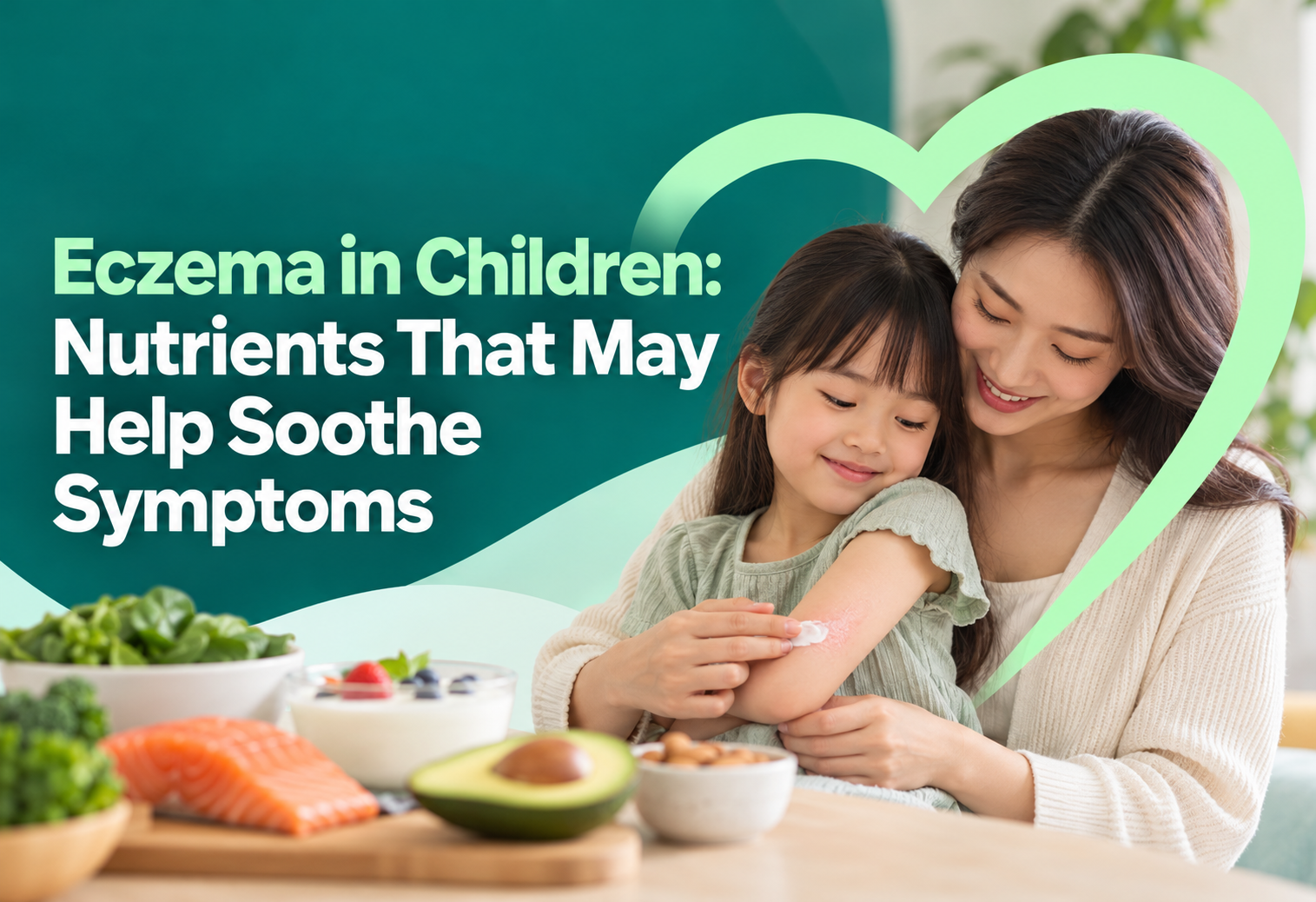
Good nutrition supports a child’s overall health, but emollients, gentle skin care and prescribed treatment remain essential for eczema management. [4, 10, 11] Vitamin D supplementation may help improve eczema symptoms in some children [5, 6], while probiotics show potential benefits, although results vary across studies. [16] Zinc supports healthy skin, particularly when dietary intake is inadequate [14], and topical virgin coconut oil may help improve skin hydration. [9] Consult a healthcare professional before introducing supplements or restricting your child’s diet. [1, 10, 11, 13, 14]
Atopic dermatitis, a common form of eczema, is an inflammatory skin condition that often begins in childhood. It can cause dry, itchy, inflamed skin and recurring flare-ups that affect a child’s comfort and quality of life. Worldwide, atopic dermatitis has been reported to affect up to 20% of children. [1, 2, 3]
Diet and nutrients are not a cure for eczema. However, certain nutrients and supplements have been studied for their potential role in supporting children with eczema. [1, 10] Nutrition should complement, rather than replace, regular moisturising, gentle skin care and appropriate medical treatment. [4, 10, 12]
What is eczema in children?
Atopic eczema is a long-term inflammatory skin condition. In children, it commonly causes dry itchy skin, redness or changes in skin colour, rough or thickened patches and recurring flare-ups. Skin-barrier dysfunction in eczema makes it harder for the skin to retain moisture, contributing to dryness. Regular moisturising helps maintain skin hydration and supports the skin barrier. [2, 3, 10, 12]
Daily moisturising with emollients is essential for managing eczema. Depending on eczema severity, some children may also need topical corticosteroids or other medicines prescribed by a doctor. Nutrition can play a supportive role alongside appropriate skin care and medical treatment. [4, 10, 12]
Can nutrition help manage childhood eczema?
Good nutrition plays an important role in supporting a child’s overall health, including skin health. Certain nutrients and supplements have also been studied for their potential benefits in children with eczema, although findings vary. As nutritional needs differ between children, an individualised approach may help identify suitable dietary and nutritional support. [1, 4, 11]
Keep using emollients and prescribed eczema medicines as directed, even if you are exploring nutritional or complementary approaches. [10, 12] A balanced diet provides essential nutrients for a child’s growth and development. Avoid unnecessary dietary restrictions without guidance from a healthcare professional. [11]
Which nutrients and approaches may help soothe eczema in children?
What role might probiotics and prebiotics play in childhood eczema?
Probiotics and prebiotics have gained interest for their potential role in supporting gut and immune health, which may be linked to skin health. Some studies suggest that certain probiotic strains may help improve eczema symptoms in children, although benefits can vary depending on the strain and individual factors. [1, 11, 16]
When choosing a probiotic supplement, consider your child’s age and health needs. A pharmacist or doctor can help you understand the different formulations and select an age-appropriate option.
Can vitamin D help children with eczema?
Vitamin D supports normal immune function and contributes to overall health. [13] Some studies have found a link between lower vitamin D levels and greater eczema severity in children. Vitamin D supplementation has also shown potential to improve eczema symptoms, although benefits may vary between individuals. [5, 6]
Maintaining adequate vitamin D levels is important for growing children. Supplements may help meet nutritional needs when dietary intake is insufficient. A pharmacist or doctor can advise on age-appropriate supplementation. [13]
How does zinc support skin health in children with eczema?
Zinc is an essential mineral that supports immune function, wound healing and normal growth and development. [8, 14] Some studies have reported lower zinc levels in children with eczema, highlighting the importance of understanding their nutritional needs. [7]
Adequate zinc intake is important for growing children, and supplements may help when dietary intake is insufficient. A pharmacist or doctor can provide guidance on age-appropriate zinc supplementation. [14]
Can virgin coconut oil be used as a moisturiser?
Topical virgin coconut oil (VCO) has been studied for its potential benefits in children with mild-to-moderate eczema. A clinical trial reported improvements in eczema severity, skin hydration and eczema severity following its use. [9]
VCO may therefore be a moisturising option for some children alongside regular eczema care. Continue using suitable, unperfumed emollients and prescribed treatments as directed. Stop using any topical product if it causes irritation, and seek medical advice if the eczema is painful, worsens or appears infected. [10, 15]
What should parents know about Chinese herbal preparations for childhood eczema?
Some Chinese herbal preparations have been studied for their potential role in eczema management, although evidence regarding their effectiveness and safety remains limited. [4, 10]
As herbal preparations may vary in their ingredients and formulations, parents are encouraged to seek advice from a qualified healthcare professional before using them for their children. Some preparations have also been associated with safety concerns, making it important to consider product quality and suitability. [1, 10]
Should children with eczema avoid common food allergens?
Not necessarily. Food allergy is more common in children with eczema, especially in babies and young children with moderate-to-severe disease. However, eczema alone may not prove that a child is allergic to foods such as milk, eggs, peanuts or other common allergens. [1, 4, 10, 11]
A food allergy can be considered when a child experiences an immediate reaction after eating a particular food, or when moderate-to-severe eczema remains poorly controlled despite appropriate treatment. In these situations, a doctor or allergy specialist can help determine whether further assessment is needed. [4, 10]
Avoid eliminating major food groups from your child’s diet without professional advice. Unnecessary food restrictions may lead to nutritional deficiencies and affect healthy growth. If certain foods need to be excluded, a healthcare professional or dietitian can help ensure your child’s nutritional needs are met. [11]
What should daily eczema care focus on?
- Moisturise daily. Apply an unperfumed emollient regularly, even when your child’s skin looks clear. [4, 10, 12]
- Follow prescribed treatment. Use topical medicines as directed by your child’s doctor to manage flare-ups. [4, 10, 12]
- Choose gentle skin-care products. Use unperfumed, non-irritating cleansers or suitable emollient wash products. [10]
- Maintain a balanced diet. Offer a variety of nutritious foods to support your child’s growth and overall health. [11]
- Consider individual nutritional needs. Supplements may help meet specific nutritional needs when dietary intake is insufficient. A pharmacist or doctor can advise on age-appropriate options. [13, 14]
- Maintain your child’s eczema-care routine. Continue regular moisturising and prescribed treatment alongside any nutritional or complementary approaches. [10, 11]
When should you seek medical advice for a child with eczema?
You may speak with a doctor or dermatologist if eczema is difficult to manage, affects sleep or daily activities, or you are considering significant dietary changes. [10]
Seek prompt medical care if your child develops signs of possible skin infection, such as pus-filled blisters, yellowish crusts, increasing pain or rapidly worsening eczema. If your child also has a fever or appears generally unwell, seek immediate medical care. [15]
Seek medical attention on the same day if your child develops rapidly worsening, painful eczema with clusters of blisters, open sores or fever. These may be signs of eczema herpeticum, a potentially serious viral skin infection that requires prompt medical treatment. [10]
Speak with a CARiNG pharmacist
A CARiNG pharmacist can help you understand eczema-friendly emollients, supplement labels, age-appropriate use and possible interactions. For persistent, severe or infected eczema, your child should be assessed by a doctor or dermatologist.
Find your nearest CARiNG Pharmacy →Useful resources
- Ministry of Health Malaysia – Clinical Practice Guidelines: Management of Atopic Eczema – Malaysian guidance on diagnosis, emollients, treatment and complementary approaches.
- NICE – Atopic eczema in under 12s: diagnosis and management – Guidance on emollients, food allergy, dietary restriction, infection and referral.
- American Academy of Dermatology – Can food fix eczema? – Consumer guidance on food allergy, elimination diets and supplements in childhood eczema.
- NIH Office of Dietary Supplements – Vitamin D – General information on vitamin D, recommended intakes and supplement safety.
- NIH Office of Dietary Supplements – Zinc – General information on zinc, age-based upper limits and interactions.
Medical disclaimer: This article is for general health education and does not replace medical advice, diagnosis or treatment. Eczema severity, food allergy risk and nutritional needs differ from child to child. Before giving supplements, starting herbal remedies, using new topical oils or removing major foods from your child’s diet, speak with a qualified healthcare professional. Seek prompt care for suspected skin infection, fever, painful rapidly worsening eczema or blistering.
Frequently asked questions about nutrition and eczema in children
What role may probiotics play in managing childhood eczema?
Probiotics support gut health and have been studied for their potential benefits in children with eczema. Some studies suggest that certain probiotic strains may help improve eczema symptoms, although results can vary depending on individual factors. Probiotics may be considered as a complementary approach alongside regular moisturising and prescribed treatment. [11, 16]
How may vitamin D support children with eczema?
Vitamin D supports normal immune function and healthy growth. [13] Some studies suggest that vitamin D supplementation may help improve eczema symptoms in children, although benefits may vary. [5, 6] Maintaining adequate vitamin D intake is important, and supplements may help meet nutritional needs when dietary intake is insufficient. A pharmacist or doctor can advise on suitable supplementation based on your child’s age and nutritional needs. [13]
When might my child benefit from zinc supplementation?
Zinc supplements may be considered if your child has difficulty meeting their nutritional needs through diet or is at risk of zinc deficiency. A pharmacist or doctor can help assess your child’s nutritional needs and recommend an appropriate supplement and dosage based on their age. [14]
Can I use virgin coconut oil on my child’s eczema?
A clinical trial found that topical virgin coconut oil improved skin hydration and eczema severity in children with mild-to-moderate atopic dermatitis. It may be suitable for some children, but regular unperfumed emollients remain the basis of eczema care. Stop if irritation occurs and seek medical advice if the skin looks infected. [9, 10, 15]
Should a child with eczema avoid milk, eggs or peanuts?
Children with eczema do not necessarily need to avoid these foods unless a food allergy has been identified or there is a specific medical reason. Avoiding major foods without assessment can lead to nutritional deficiencies and growth concerns. Seek professional guidance when a food allergy is suspected. [1, 4, 10, 11]
Are Chinese herbal remedies safe for childhood eczema?
Some Chinese herbal preparations have been studied for eczema management, although their effectiveness and safety are not yet fully established. As ingredients and formulations may vary, parents should consult a qualified healthcare professional before considering herbal remedies for their children. [4, 10]
How can a balanced diet support children with eczema?
A balanced diet provides essential nutrients for a child’s growth, development and overall health. While no specific diet has been established to treat eczema, maintaining adequate nutrition is important. Dietary adjustments may be considered based on individual needs, particularly when a food allergy has been identified. [10, 11]
When is childhood eczema urgent?
Seek urgent medical advice for painful, rapidly worsening eczema with clusters of blisters or punched-out sores, especially if your child has a fever or seems unwell. These can be signs of eczema herpeticum. [10]
View references 16 sources
- CARiNG Pharmacy. Nutrients That May Help Soothe Eczema in Children. Approved source article supplied for this update.
- Banerjee N, Grewal A. What is the most effective systemic treatment for atopic dermatitis? Clinical & Experimental Allergy. 2021;51(9):1103-1106. doi:10.1111/cea.13980. Source
- Tokura Y, Yunoki M, Kondo S, Otsuka M. What is “eczema”? The Journal of Dermatology. 2025;52(2):192-203. doi:10.1111/1346-8138.17439. Source
- Ministry of Health Malaysia. Clinical Practice Guidelines: Management of Atopic Eczema. Putrajaya: Malaysian Health Technology Assessment Section (MaHTAS); 2018. Source
- Huang CM, Lara-Corrales I, Pope E. Effects of Vitamin D levels and supplementation on atopic dermatitis: A systematic review. Pediatric Dermatology. 2018;35(6):754-760. doi:10.1111/pde.13639. Source
- Hidayati AN, Sawitri S, Sari DW, et al. Efficacy of vitamin D supplementation on the severity of atopic dermatitis in children: A systematic review and meta-analysis. F1000Research. 2023;11:274. doi:10.12688/f1000research.106957.2. Source
- David TJ, Wells FE, Sharpe TC, Gibbs ACC. Low serum zinc in children with atopic eczema. British Journal of Dermatology. 1984;111(5):597-601. doi:10.1111/j.1365-2133.1984.tb06630.x. Source
- Molina EL, Patel JA. A to Z: Vitamin A and zinc, the miracle duo. Indian Journal of Pediatrics. 1996;63(4):427-431. doi:10.1007/BF02905712. Source
- Evangelista MT, Abad-Casintahan F, Lopez-Villafuerte L. The effect of topical virgin coconut oil on SCORAD index, transepidermal water loss, and skin capacitance in mild to moderate pediatric atopic dermatitis: a randomized, double-blind, clinical trial. International Journal of Dermatology. 2014;53(1):100-108. doi:10.1111/ijd.12339. Source
- National Institute for Health and Care Excellence (NICE). Atopic eczema in under 12s: diagnosis and management (CG57). Recommendations. Accessed 8 October 2026. Source
- American Academy of Dermatology. Can food fix eczema? Accessed 8 October 2026. Source
- American Academy of Dermatology. Atopic dermatitis clinical guideline: pediatric atopic dermatitis. Accessed 8 October 2026. Source
- National Institutes of Health, Office of Dietary Supplements. Vitamin D – Fact Sheet for Consumers. Accessed 8 October 2026. Source
- National Institutes of Health, Office of Dietary Supplements. Zinc – Fact Sheet for Consumers. Accessed 8 October 2026. Source
- American Academy of Dermatology. Is that eczema or an infection on my child’s skin? Accessed 8 October 2026. Source
- Fijan S, Kolc N, Hrasovec M, et al. Single-Strain Probiotic Lactobacilli for the Treatment of Atopic Dermatitis in Children: A Systematic Review and Meta-Analysis. Pharmaceutics. 2023;15(4):1256. doi:10.3390/pharmaceutics15041256. Source
Related Health Info
Latest Health Info

Malaysia Haze & Air Quality Index (AQI) Today
Is the air safe where you are? Check Malaysia’s latest haze readings, find the nearest monitoring location and get practical ...
Eczema in Children: Nutrients That May Help Soothe Symptoms
The short answer Good nutrition supports a child’s overall health, but emollients, gentle skin care and prescribed treatment remain essential ...

Smoking and Skin Ageing: Why Cigarettes Cause Wrinkles and Sagging
The short answer Yes. Cigarette smoking can accelerate skin ageing, contributing to premature wrinkles, uneven skin tone and loss of ...