
- Home
- Health Center
- Health Info
- Smoking and Skin Ageing: Why Cigarettes Cause Wrinkles and Sagging
Smoking and Skin Ageing: Why Cigarettes Cause Wrinkles and Sagging
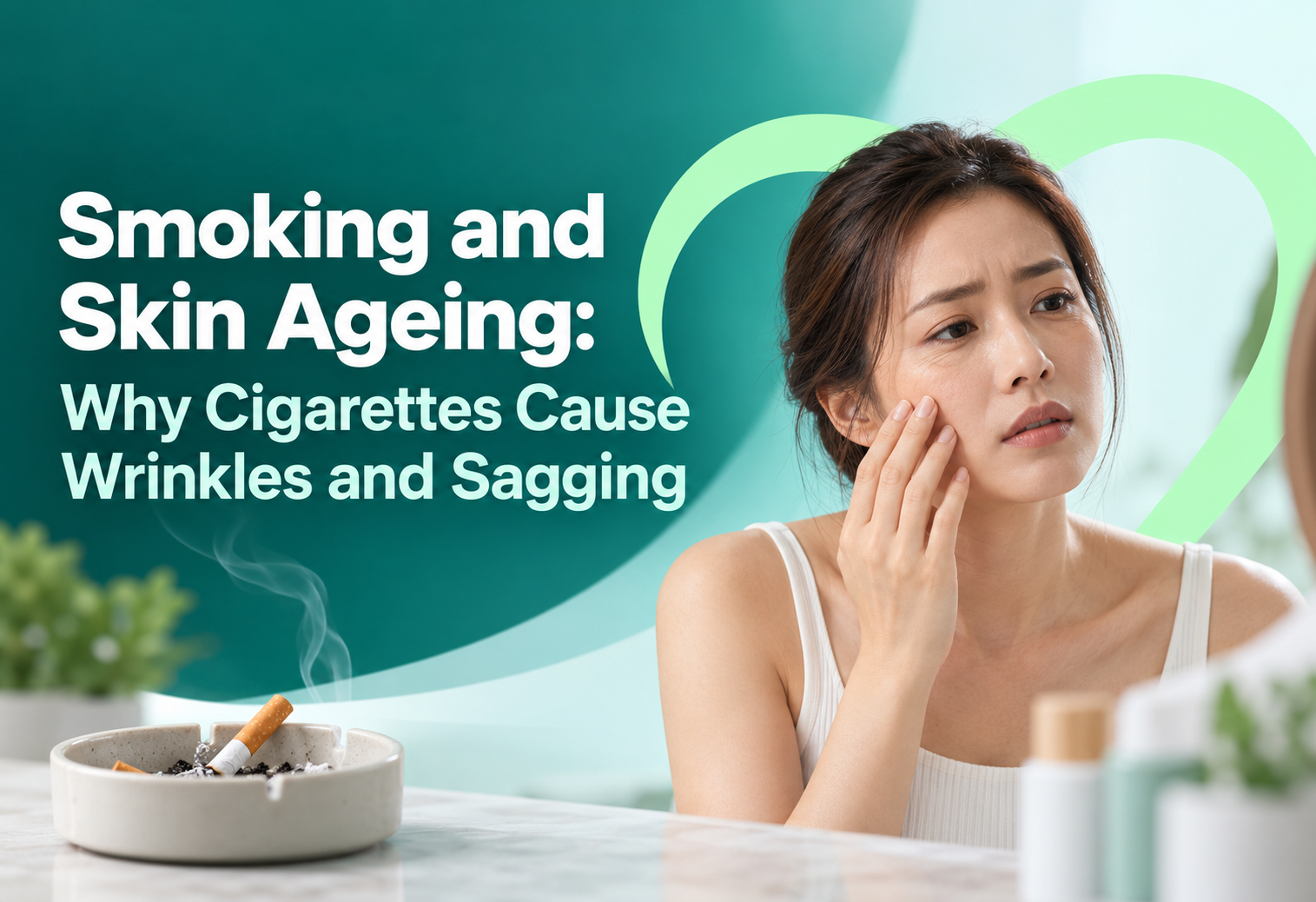
Yes. Cigarette smoking can accelerate skin ageing, contributing to premature wrinkles, uneven skin tone and loss of firmness. [1, 2, 3, 5, 6] Chemicals in cigarette smoke can increase oxidative stress, contribute to the breakdown of collagen and elastic fibres, and reduce blood flow to the skin. [5, 6] Quitting smoking benefits overall health at any age, and some improvements in skin colour may occur after quitting. [8, 9]
Many people invest in skincare products to maintain smooth, firm and healthy-looking skin. However, skincare alone may not be enough to prevent premature skin ageing. Smoking is one of the lifestyle factors that can accelerate skin ageing, contributing to wrinkles and a dull complexion. Avoiding smoking or taking steps to quit can help protect your skin and overall health. [6, 12]
Cigarette smoke contains more than 7,000 chemicals, many of which are harmful to health. While smoking is widely known for its effects on the lungs, heart and cancer risk, it can also accelerate skin ageing. Tobacco smoke contributes to oxidative stress, reduces blood flow to the skin and affects collagen and elastic fibres, which help maintain skin firmness and elasticity. [5, 6, 7, 11]
How does smoking make skin look older?
Smoking can accelerate skin ageing through several mechanisms. Chemicals in tobacco smoke contribute to oxidative stress and affect collagen and elastic fibres that help maintain skin firmness. Smoking also reduces blood flow to the skin, which may contribute to premature wrinkles, sagging and uneven skin tone. [5, 6]
What happens to the skin when you smoke?
| Smoking-related effect | What happens in the skin | What you may notice |
|---|---|---|
| Oxidative stress | Chemicals in cigarette smoke can increase oxidative stress, which contributes to skin-cell damage and premature ageing. [5, 6] | Earlier development of visible ageing changes, including wrinkles and loss of firmness. |
| Collagen and elastic fibre changes | Smoking promotes collagen breakdown and changes in elastic fibres that help maintain skin strength and elasticity. [4, 5, 6] | Fine lines, deeper wrinkles, sagging skin and reduced firmness. |
| Reduced blood flow | Smoking can narrow blood vessels, reducing blood supply to the skin. [1, 6] | Skin may appear dull, greyish or uneven in tone. |
| Delayed repair | Smoking can delay wound healing through reduced oxygen delivery, impaired collagen synthesis and slower formation of new blood vessels. [6] | Cuts or wounds may take longer to heal, with a greater risk of complications. |
What skin changes are linked to smoking?
Smoking is associated with several visible changes in the skin, although their appearance and severity may vary depending on factors such as age, sun exposure and genetics. [2, 3, 5, 6]
- Premature wrinkles: Fine lines and deeper wrinkles, particularly around the eyes and lips.
- Uneven skin tone: Skin may appear dull, greyish or yellowish.
- Reduced skin firmness: Sagging skin, baggy eyelids or a looser jawline may become more noticeable.
- Dry, coarse skin: Skin may feel drier or have a rougher texture.
- Slower wound healing: Skin injuries and surgical wounds may take longer to heal, with an increased risk of complications.
These visible changes are sometimes collectively described as “smoker’s face”, a term associated with premature wrinkles, a gaunt appearance and uneven skin colouring in people who smoke. [1, 6]
How strong is the link between smoking and wrinkles?
Research has consistently linked cigarette smoking with premature facial wrinkles. Studies have found that people who smoke are more likely to develop noticeable facial wrinkles than those who do not smoke, even after accounting for factors such as age and sun exposure. [1, 2, 3]
Laboratory and clinical research has also helped explain how smoking contributes to skin ageing. Cigarette smoke can increase the activity of enzymes that break down collagen and other structural proteins, while also reducing collagen production. These changes may contribute to wrinkles and loss of skin firmness. [4, 5]
Smoking is one of the several factors that can contribute to premature skin ageing. Natural ageing, genetics, sun exposure and lifestyle habits may also influence the development of wrinkles and loss of skin firmness. While quitting smoking cannot prevent natural skin ageing, it can help reduce further smoking-related skin damage and support healthier-looking skin. [6, 12]
Why does smoking damage collagen and elastin?
Collagen gives skin much of its strength and structural support, while elastic fibres help skin return to shape after stretching. Tobacco smoke disrupts this balance. It can reduce collagen production, increase enzymes that break down collagen and alter elastic fibres, contributing to premature skin ageing. [4, 5]
Over time, these changes may contribute to deeper wrinkles, reduced skin firmness and sagging. The extent of skin ageing may also be influenced by smoking duration and intensity, sun exposure and other individual factors. [2, 5, 6]
Does smoking reduce blood flow to the skin?
Yes. Smoking can cause blood vessels to narrow, reducing blood flow and oxygen delivery to the skin. It is also associated with changes in skin appearance, including a greyish or uneven complexion. [1, 6]
Beyond its effects on the skin, smoking can also have serious consequences for overall health, increasing the risk of cancer, cardiovascular disease and respiratory conditions. As tobacco use carries health risks, avoiding tobacco is important for long-term health. [11]
Can quitting smoking improve your skin?
Quitting smoking is an important step for stopping continued exposure to cigarette smoke. The health benefits begin after cessation and can apply at any age, regardless of how long a person has smoked. [8]
Some improvements in skin appearance may also occur after quitting. A clinical study reported changes in skin lightness and redness among people who successfully stopped smoking, with improvements in skin lightness observed over approximately 4–12 weeks. [9]
While changes in skin appearance may vary between individuals, quitting smoking is an important step towards maintaining healthier-looking skin. Combining smoking cessation with healthy skin-care habits, such as sun protection and regular moisturising, may help support skin health over time. [12]
What can help protect your skin after quitting?
Quitting smoking is an important step towards healthier-looking skin. Alongside smoking cessation, adopting good skincare habits can help reduce further premature skin ageing. [12]
- Protect your skin from the sun. Apply broad-spectrum sunscreen with SPF 30 or higher daily, and use protective clothing or seek shade when outdoors.
- Cleanse gently. Use a gentle cleanser rather than aggressive scrubbing, which can irritate the skin.
- Moisturise daily. Apply a moisturiser regularly to support hydration and maintain a healthier-looking complexion.
- Avoid tanning. Excessive UV exposure from the sun or tanning beds can accelerate premature skin ageing.
- Maintain healthy habits. A balanced diet, regular physical activity and avoiding tobacco can support overall health and healthier-looking skin.
Sunscreen, moisturisers and other skincare products can help maintain healthy-looking skin, but they do not eliminate the harmful effects of smoking. [12] Quitting smoking can help reduce further smoking-related skin damage while providing important benefits for overall health. [8, 12]
How can you get help to stop smoking?
Nicotine dependence can make quitting challenging, but professional support and treatment options are available. The World Health Organization recommends behavioural support and, where appropriate, medicines to help adults quit smoking. [10]
- Seek professional guidance. A healthcare professional can provide advice and help you develop a quit-smoking plan.
- Explore behavioural support. Individual or group counselling, telephone support and digital tools may help you work towards quitting.
- Understand nicotine dependence. Quitting smoking may involve withdrawal symptoms and cravings. A healthcare professional can help you understand these challenges and discuss appropriate ways to manage them.
- Stay committed to quitting. If you start smoking again, consider seeking further support to help you continue your quit-smoking journey.
Quitting smoking is a process, and the right support can help you take steps towards a smoke-free lifestyle.
Speak with a CARiNG pharmacist
Quitting smoking can be challenging, but professional guidance can help. CARiNG pharmacists can provide information on nicotine dependence, managing cravings and practical strategies to support your quit-smoking journey.
Find your nearest CARiNG Pharmacy →Useful resources
- World Health Organization – Tobacco and nicotine – Current global facts on the health effects of tobacco and nicotine.
- World Health Organization – Clinical treatment guideline for tobacco cessation in adults – Evidence-based recommendations for behavioural and pharmacological support to quit tobacco.
- CDC – Benefits of Quitting Smoking – A summary of health benefits after stopping smoking.
- DermNet – Smoking and its effects on the skin – Dermatology information on skin ageing, wound healing and other skin effects of smoking.
- American Academy of Dermatology – 11 ways to reduce premature skin aging – Practical dermatologist advice on sun protection, moisturising, gentle skin care and smoking cessation.
Medical disclaimer: This article is for general health education and does not replace medical advice, diagnosis or treatment. Smoking cessation medicines may not be suitable for everyone. Speak with a pharmacist, doctor or other qualified healthcare professional for advice based on your health conditions, medicines, pregnancy status and smoking history.
Frequently asked questions about smoking and skin ageing
Does smoking really cause wrinkles?
Does smoking make your skin sag?
Will my skin improve if I stop smoking?
How quickly can skin look better after quitting?
Some improvements in skin appearance may occur within a few weeks of quitting smoking. A clinical study reported increased skin lightness between weeks 4 and 12 among participants who successfully quit smoking. [9]
How can skincare help protect your skin from premature ageing?
Skincare can help maintain skin hydration and reduce premature ageing caused by sun exposure. Regular moisturising, sun protection and gentle cleansing are beneficial, while avoiding smoking remains an important step in protecting skin health. [12]
Can a pharmacist help me quit smoking?
Yes. Pharmacists can provide guidance on nicotine dependence, help you understand common withdrawal symptoms and discuss practical strategies to support your quit-smoking journey. You can speak with a CARiNG pharmacist for further information and guidance. [10]
View references 12 sources
- CARiNG Pharmacy. Smoking Hot? Well Cigarettes Make You Sag a Lot. Original CARiNG source article used for this update. Source
- Kadunce DP, Burr R, Gress R, Kanner R, Lyon JL, Zone JJ. Cigarette smoking: risk factor for premature facial wrinkling. Ann Intern Med. 1991;114(10):840-844. doi:10.7326/0003-4819-114-10-840. Source
- Ernster VL, Grady D, Miike R, Black D, Selby J, Kerlikowske K. Facial wrinkling in men and women, by smoking status. Am J Public Health. 1995;85(1):78-82. Source
- Lahmann C, Bergemann J, Harrison G, Young AR. Matrix metalloproteinase-1 and skin ageing in smokers. Lancet. 2001;357(9260):935-936. Source
- Morita A. Tobacco smoke causes premature skin aging. J Dermatol Sci. 2007;48(3):169-175. doi:10.1016/j.jdermsci.2007.06.015. Source
- DermNet. Smoking and its effects on the skin. Accessed 9 October 2026. Source
- Centers for Disease Control and Prevention. Health Effects of Cigarettes: Cancer. Updated 17 September 2024. Accessed 9 October 2026. Source
- Centers for Disease Control and Prevention. Benefits of Quitting Smoking. Updated 15 May 2024. Accessed 9 October 2026. Source
- Ishiwata T, Seyama K, Hirao T, et al. Improvement in skin color achieved by smoking cessation. Int J Cosmet Sci. 2013;35(2):191-195. doi:10.1111/ics.12025. Source
- World Health Organization. WHO clinical treatment guideline for tobacco cessation in adults. Geneva: World Health Organization; 2024. Source
- World Health Organization. Tobacco and nicotine. Fact sheet. 26 June 2026. Accessed 9 October 2026. Source
- American Academy of Dermatology. 11 ways to reduce premature skin aging. Accessed 9 October 2026. Source
Related Health Info
Latest Health Info

Malaysia Haze & Air Quality Index (AQI) Today
Is the air safe where you are? Check Malaysia’s latest haze readings, find the nearest monitoring location and get practical ...

Eczema in Children: Nutrients That May Help Soothe Symptoms
The short answer Good nutrition supports a child’s overall health, but emollients, gentle skin care and prescribed treatment remain essential ...
Smoking and Skin Ageing: Why Cigarettes Cause Wrinkles and Sagging
The short answer Yes. Cigarette smoking can accelerate skin ageing, contributing to premature wrinkles, uneven skin tone and loss of ...