
- Home
- Health Center
- Health Info
- Palliative Care in Malaysia: How Can a Community Pharmacist Help?
Palliative Care in Malaysia: How Can a Community Pharmacist Help?
Written By Ms. Lim Kai Shan
Registered Pharmacist
- Palliative care is not only end-of-life care. It supports people living with serious illness by relieving pain and other distressing symptoms, while supporting comfort, dignity and quality of life. It can be provided alongside treatment for the underlying illness. [1, 3, 4]
- In the community, pharmacists can help patients and caregivers understand medicines, identify possible medicine-related concerns, use medicines for pain and other symptoms safely, organise routines, plan supplies and manage medicines that are no longer needed. Their role complements – and does not replace – the treating doctor, nurse, hospice or palliative care team. [1, 3, 5–8]
- Seek prompt medical attention if pain or breathlessness becomes severe or difficult to control, or if there is sudden confusion, marked drowsiness or another significant change in the person’s condition.
Living with a serious or life-limiting illness can change everyday life for both the person who is unwell and the family members caring for them. Symptoms, appointments and medicines can become part of the daily routine, especially when more care is provided at home. [3, 5, 6]
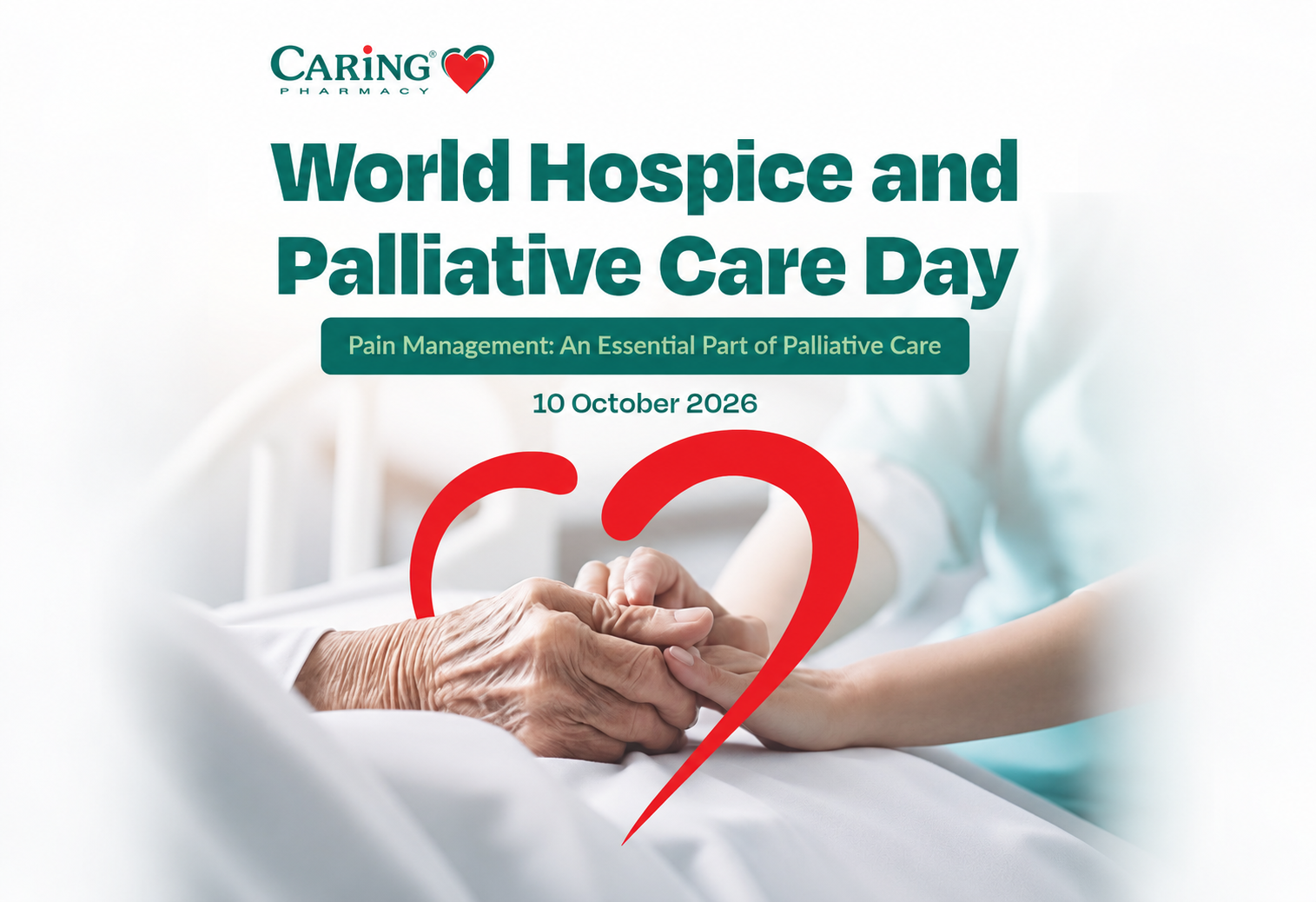
World Hospice and Palliative Care Day 2026 falls on 10 October, with the theme “Pain Management: An Essential Part of Palliative Care.” The theme recognises that pain is not only physical, but can also affect a person psychologically, socially and spiritually. [2, 9, 10]
For patients and caregivers, knowing where to turn when medicines become confusing, difficult to manage or hard to obtain can be important. A community pharmacist can be one source of practical support.
What is palliative care, and is it only for end-of-life care?
Palliative care aims to prevent and relieve suffering for people living with serious illness. It considers physical symptoms as well as psychological, social and spiritual needs, while also supporting families and caregivers. [3]
It is not limited to the final days of life. Palliative care can be introduced earlier in the course of illness and can be provided alongside treatments intended to manage the underlying condition. Malaysia’s National Palliative Care Policy and Strategic Plan 2019-2030 also sets out recommendations to strengthen palliative care across hospitals, primary care, community and home-based settings. [3, 4]
Depending on the person’s needs, palliative care may help manage symptoms and concerns such as:
- Pain
- Breathlessness
- Nausea or vomiting
- Constipation
- Poor appetite
- Anxiety or emotional distress
Why can medicines become difficult to manage during palliative care?
People receiving palliative care may use several medicines at the same time to manage different symptoms. Some are taken regularly, while others are used only when a symptom occurs. Medicines may also be started, stopped or adjusted after a hospital visit or review. [5, 6, 8]
Research in community palliative care has identified challenges such as complex medicine regimens, access to medicines, communication between care providers and ensuring that patients and caregivers have clear information about their medicines. [6–8]
Common questions include:
- What is this medicine for?
- When and how should it be taken?
- What should I do if a dose is missed?
- Could this medicine be causing a side effect?
- What should we do if the symptom is not improving?
- How can we make sure an important prescribed medicine does not run out?
How can a community pharmacist support palliative care patients and caregivers?
Palliative care is a team effort. Community pharmacists do not replace the patient’s doctor, nurse, hospice or specialist palliative care team. However, they may provide useful medicine-related support close to home. Evidence from community palliative care services highlights areas where pharmacists may contribute, including medicine review, patient or caregiver education, support with medicine access and communication with other healthcare providers. The type of support available may vary between pharmacies and care settings. [3, 5–8]
Explain what each medicine is for
A pharmacist can explain why a medicine has been prescribed, how and when it should be taken, and which common side effects or precautions to be aware of. This can be especially helpful when several medicines are involved or when the treatment plan has recently changed.
Medication review and patient or caregiver education are among the ways pharmacists may contribute to palliative care. [5, 7, 8]
Help identify medicine-related concerns
When several medicines are prescribed, a pharmacist can help identify possible medicine-related concerns such as duplicate therapy, potential interactions, side effects or difficulties following the prescribed schedule. [5, 7, 8]
If a concern needs further assessment or a change in treatment, the pharmacist can advise the patient or caregiver to contact the treating healthcare team.
Support the safe use of medicines for pain and other symptoms
Pain relief is an important part of palliative care, but pain can have different causes and may require different approaches. The 2026 World Hospice and Palliative Care Day theme also highlights the importance of a holistic approach to pain, recognising that pain can affect a person physically, psychologically, socially and spiritually. [2, 5, 9]
For prescribed medicines used to manage pain or other symptoms, a pharmacist can reinforce instructions on how to take and store them safely, explain common side effects and help patients and caregivers understand what to monitor.
If pain is not well controlled, becomes worse or a new symptom develops, contact the treating healthcare or palliative care team. Do not increase, reduce or stop a prescribed medicine on your own unless this is already part of an agreed care plan.
Help caregivers manage medicine routines
Family caregivers often help with medicine routines, particularly when there are several medicines or different dosing schedules. Medication management can become stressful when instructions change or when information comes from different parts of the healthcare system. [5, 8]
A pharmacist can clarify label instructions, explain changes to the medication plan and suggest practical ways to make the routine easier and safer to follow.
Plan ahead for medicine supplies
Not every pharmacy will stock every medicine used in palliative care, and difficulties accessing some medicines have been reported in community settings. [6–8]
If a person regularly needs a particular prescribed medicine, checking its availability with the pharmacy before the current supply runs low may help reduce last-minute difficulties. A pharmacist can also advise on availability or explain any prescription or refill requirements that may apply.
Advise on medicines that are no longer needed
Medicines that are no longer required should not be shared with another person. Malaysia’s 2026 Palliative Pharmacotherapy Guideline for Pharmacists includes guidance on the return and disposal of unused palliative medicines. [5]
If the treatment plan has changed or medicines are no longer needed, ask the pharmacist or the treating healthcare team about the appropriate ways to handle and dispose of them safely.
When should you ask a pharmacist or healthcare team for more help?
Use the guide below as a general starting point. The person’s individual palliative care plan and advice from their treating healthcare team should always take priority.
| Situation | What to do |
|---|---|
| You are unsure what a medicine is for, how to take it, what to do about a missed dose, or whether it may be causing a side effect. | Speak with the pharmacist or the treating healthcare team for advice based on the individual care plan. |
| The medicine schedule is difficult to manage, medicines have recently changed, or you are worried about running out of an important prescribed medicine. | Contact the pharmacy early to clarify instructions, check availability and understand any prescription or supply requirements. |
| Pain, breathlessness or another symptom is becoming difficult to control. | Contact the treating healthcare or palliative care team promptly. Do not change the dose unless advised by a healthcare professional or according to the person’s agreed care plan. |
| There is new or worsening confusion, unusual or marked drowsiness, severe breathing difficulty, or another significant unexpected change in the person’s condition. | Follow the person’s palliative care plan and contact the treating healthcare or palliative care team urgently. If the change is severe or immediately life-threatening and you cannot reach the team, seek emergency medical attention. |
How does community pharmacy fit into the wider palliative care team?
Palliative care usually involves a team of healthcare professionals. WHO includes pharmacists among the health professionals who may contribute to palliative care, alongside doctors, nurses and other healthcare and support professionals. [3]
In Malaysia, the 2026 Palliative Pharmacotherapy Guideline for Pharmacists recognises pharmacists as part of the multidisciplinary healthcare team. The guideline covers areas including symptom management, medication safety, continuity of care, and the return and disposal of unused palliative medicines. [5]
Research on community pharmacy involvement in palliative care also highlights the importance of communication and information-sharing between healthcare professionals. Pharmacists may have useful medicine expertise but limited access to relevant patient information and gaps in communication can make it more difficult for pharmacists to provide support that aligns with the patient’s overall care plan. [6–8]
Why does palliative care go beyond medicines?
Medicines are important for relieving many symptoms, but palliative care looks at the person as a whole. Pain and suffering may have physical, psychological, social and spiritual dimensions, while families and caregivers may also need support. [2, 3, 9]
Community pharmacists can be one source of support for medicine-related questions and practical guidance. However, palliative care is a team effort, and symptoms that are severe, worsening or difficult to control should be discussed promptly with the treating palliative care or medical team.
Speak with a CARiNG pharmacist
If you are supporting someone receiving palliative care, a CARiNG pharmacist can help with medicine-related questions, safe use, medicine routines and supply planning. Pharmacy support complements the person’s doctor, nurse, hospice or palliative care team.
Find your nearest CARiNG Pharmacy →Useful resources
- World Health Organization – Palliative care – Overview of palliative care, symptoms, team-based care and early integration.
- Ministry of Health Malaysia – National Palliative Care Policy and Strategic Plan 2019-2030 – Malaysia’s national framework for palliative care development and access.
- Pharmaceutical Services Programme, MOH Malaysia – Palliative Pharmacotherapy Guideline for Pharmacists – 2026 guidance on pharmacist roles, symptom pharmacotherapy, medication safety, continuity of care and unused palliative medicines.
- Hospital Tuanku Ja’afar / Negeri Sembilan State Health Department – Palliative Care Day 2026 – Malaysia-based information on the 2026 World Hospice and Palliative Care Day theme.
Medical disclaimer: This article is for general health education and is not a substitute for medical advice, diagnosis or treatment. Palliative care and medicine plans should be individualised by the treating healthcare team. Seek prompt medical attention for severe or worsening symptoms, breathing difficulty, sudden confusion, marked drowsiness or another significant change in condition.
Frequently asked questions about palliative care and community pharmacists
Is palliative care only for the last days of life?
Can a community pharmacist change my prescribed palliative care medicines?
Generally, not on their own. A pharmacist can help review medicine-related concerns, explain how medicines are used and, where appropriate, discuss possible changes with the treating healthcare team. Patients and caregivers should not change a prescribed dose or stop a medicine without advice from the treating team. If a treatment change may be needed, the pharmacist can advise the patient or caregiver to contact the treating healthcare or palliative care team. [5, 7, 8]
What should I do if pain medicine is not working well enough?
Can I ask a pharmacist about side effects or missed doses?
Do all pharmacies stock medicines used in palliative care?
What should I do with palliative care medicines that are no longer needed?
Do not share them with another person. Ask the pharmacist or the treating healthcare team about the appropriate way to return or dispose of them safely. Malaysia’s 2026 Palliative Pharmacotherapy Guideline for Pharmacists includes guidance on the return and disposal of unused palliative medicines. [5]
View references 10 sources
- CARiNG Pharmacy. Palliative Care in Malaysia: How Can a Community Pharmacist Help? Approved CARiNG source document supplied for publication.
- Worldwide Hospice Palliative Care Alliance. World Hospice and Palliative Care Day 2026: Pain Management – An Essential Part of Palliative Care. 2026.
- World Health Organization. Palliative care. Geneva: World Health Organization. Source
- Ministry of Health Malaysia. National Palliative Care Policy and Strategic Plan 2019-2030. Putrajaya: Ministry of Health Malaysia; 2019. Source
- Pharmaceutical Services Programme, Ministry of Health Malaysia. Palliative Pharmacotherapy Guideline for Pharmacists. 1st ed. Putrajaya: Ministry of Health Malaysia; 2026. Source
- Chiu ST, Aspden T, Scahill S. Community pharmacy service provision to adults with palliative care needs in their last year of life: a scoping review. J Prim Health Care. 2024;16(4):398-406. doi:10.1071/HC24089. Source
- Thrimawithana TR, Spence M, Lee M, Naysoe N, Hanna S, Yako G, Goma S, Stupans I, Lim CX. The role of pharmacist in community palliative care – a scoping review. Int J Pharm Pract. 2024;32(3):194-200. doi:10.1093/ijpp/riae015. Source
- Kuruvilla L, Weeks G, Eastman P, George J. Medication management for community palliative care patients and the role of a specialist palliative care pharmacist: a qualitative exploration of consumer and health care professional perspectives. Palliat Med. 2018;32(8):1369-1377. doi:10.1177/0269216318777390. Source
- Connor SR, Aggarwal G, Brennan J, Downing J, Garcia JBS, Namisango E, Radbruch L, Wicksell RK, Rosa WE. Pain management without excess: an essential palliative care imperative. Palliat Med. 2026;40(9):1226-1228. doi:10.1177/02692163261481974. Source
- Hospital Tuanku Ja’afar Seremban, Negeri Sembilan State Health Department, Ministry of Health Malaysia. Palliative Care Day 2026. Published 29 September 2026. Source
Related Health Info
Latest Health Info
Palliative Care in Malaysia: How Can a Community Pharmacist Help?
Key takeaways Palliative care is not only end-of-life care. It supports people living with serious illness by relieving pain and ...

Collagen and Skin Health: Build, Strengthen, Protect & Preserve
Sponsored by Blackmores Key takeaways Collagen provides structural support for the skin, while vitamin C supports normal collagen formation. Grape ...

Health Check & Screening Packages | CARiNG Pharmacy
Your body’s telling you something. Are you listening? Feeling tired or dizzy Trouble sleeping Unexplained weight changes Frequent muscle aches ...