
- Home
- Health Center
- Health Info
- The Role of Vitamin D in a Healthy Pregnancy
Vitamin D
The Role of Vitamin D in a Healthy Pregnancy
Written By MS. NOREEN ERYANNIE BINTI JAFFAR
Registered Pharmacist
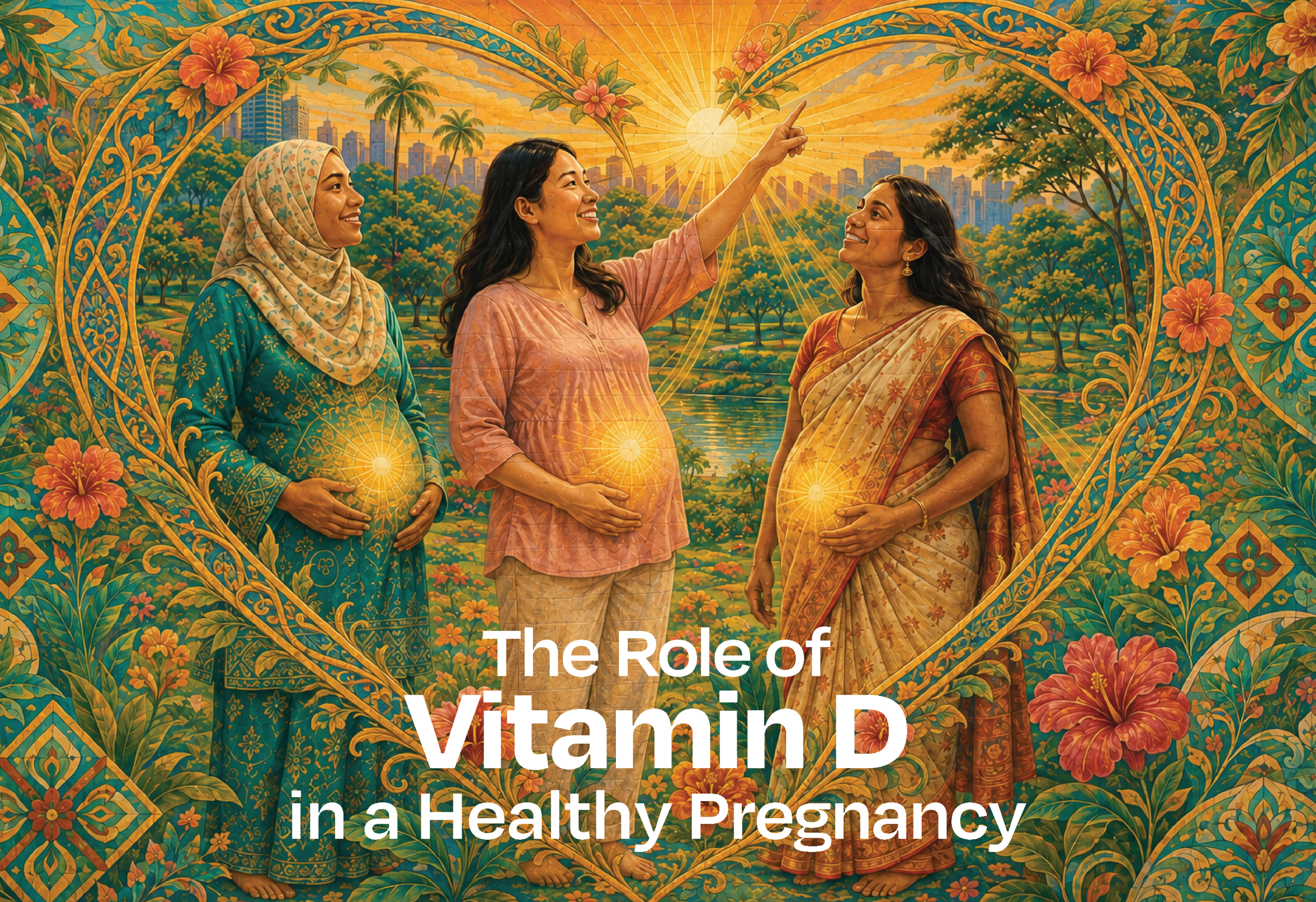
Living in a sunny country does not necessarily mean you are getting enough vitamin D. Vitamin D helps the body absorb calcium and supports maternal bone health and the baby’s skeletal development during pregnancy. [1, 2] Getting enough vitamin D is important, but taking extra vitamin D does not necessarily prevent pregnancy complications.
Research reviews suggest vitamin D supplementation may improve vitamin D status and may influence outcomes such as preterm birth or low birth weight, but the certainty of evidence varies across studies. This is why current guidance focuses on adequate vitamin D intake and individual assessment rather than routinely recommending high-dose supplementation. [3]
Vitamin D is sometimes called the “sunshine vitamin” because the skin can produce it when exposed to ultraviolet B (UVB) radiation. It is also obtained from certain foods and supplements. During pregnancy, the goal is not to “boost” vitamin D levels as high as possible, but to maintain an adequate intake as part of a balanced prenatal diet.
Why is vitamin D important for the baby during pregnancy?
Vitamin D supports calcium and phosphorus balance, which are essential for healthy skeletal development. Maternal vitamin D status has also been studied in relation to the child’s bone health later in life. These roles are among the reasons why vitamin D is included in pregnancy nutrition recommendations. [4]
Why does vitamin D matter for the mother?
For the mother, vitamin D supports normal calcium absorption and bone mineralisation. Low vitamin D status has been associated with pregnancy complications such as pre-eclampsia and gestational diabetes in observational research. However, an association does not prove that vitamin D deficiency directly causes these conditions, so supplementation should not be presented as a guaranteed way to prevent them. [5, 6]
Vitamin D also plays biological roles in the placental function and immune signalling. Research into these effects is ongoing, but these findings do not necessarily mean that higher-dose supplementation improves pregnancy outcomes. [7]
Why can vitamin D levels be low during pregnancy?
Vitamin D status can be affected by several factors, including limited outdoor exposure, darker skin pigmentation, clothing that covers most of the skin, low intake of vitamin D-rich foods, obesity, and conditions that affect fat absorption or vitamin D metabolism. Living in a sunny climate does not necessarily mean that everyone has adequate vitamin D levels. [8]
What are safe sources of vitamin D during pregnancy?
Food
Fatty fish such as salmon, sardines and mackerel are natural sources of vitamin D. Egg yolks and vitamin D-fortified foods, such as some milk or breakfast cereals, can also contribute to vitamin D intake. Check food labels, as the amount of vitamin D added to fortified foods varies by product.
Sunlight
Sun exposure can contribute to vitamin D production, but there is no single recommended duration that applies to everyone. Vitamin D production varies depending on factors such as skin pigmentation, time of day, clothing, weather and other factors. Follow sensible sun-safety practices rather than deliberately seeking prolonged, unprotected sun exposure. [9]
Supplements
Prenatal vitamins or separate vitamin D supplements can help meet vitamin D intake needs when appropriate. Check the label of your prenatal vitamin before taking an additional supplement to avoid unintentionally exceeding the intended intake. [10]
How much vitamin D do pregnant women need?
Current guidelines differ on whether all pregnant women should take vitamin D in amounts above the standard dietary intake. The 2024 Endocrine Society guideline suggests empiric supplementation during pregnancy because clinical trials indicate potential benefits for several maternal, fetal and neonatal outcomes, but it does not establish a single optimal dose for all pregnant women. [11]
The World Health Organization, however, does not recommend vitamin D supplementation for all pregnant women solely to improve maternal and perinatal outcomes. This highlights the importance of considering individual needs rather than treating general guidance as a personal recommendation. [12]
For Malaysia, the Recommended Nutrient Intakes for Malaysia 2017 recommends 15 micrograms (mcg), equivalent to 600 IU, of vitamin D per day during pregnancy. The U.S. National Institutes of Health/Food and Nutrition Board also recommends 15 mcg (600 IU) per day for pregnancy. The U.S. tolerable upper intake level for adults, including pregnant women, is 100 mcg (4,000 IU) per day from all sources; this upper limit is a safety ceiling, not a daily target. [13, 8]
| Guidance source | What it says | What it means for readers |
|---|---|---|
| Endocrine Society, 2024 | Suggests empiric vitamin D supplementation during pregnancy because clinical trials show potential benefit for several maternal, fetal and neonatal outcomes; it does not establish a single optimal dose for all pregnant women. | This does not mean that high-dose supplementation is appropriate for everyone. Consider total vitamin D intake from food, prenatal vitamins and other supplements with your healthcare professional. |
| World Health Organization, 2023 | Does not recommend vitamin D supplementation for all pregnant women solely to improve maternal and perinatal outcomes. | Routine additional supplementation may not be necessary for everyone. |
| Malaysia RNI 2017 | Recommends 15 mcg (600 IU) of vitamin D per day during pregnancy. | Use the RNI as an intake reference and check how much your prenatal vitamin already provides. |
Important: More is not always better.
High-dose vitamin D should not be used to treat a suspected deficiency during pregnancy without guidance from a healthcare professional. If you are taking a prenatal multivitamin, calcium supplement or other nutritional products, check the vitamin D content of each product before adding another supplement.
Is vitamin D deficiency common in pregnant women in Malaysia?
It can occur. In a Malaysian study of 535 third-trimester women who attended government health clinics in Selangor and Kuala Lumpur, 42.6% had serum 25-hydroxyvitamin D below 30 nmol/L, which the study classified as vitamin D deficiency. This finding shows that low vitamin D status can occur even in a tropical country with year-round sunshine. [14]
Should every pregnant woman have a vitamin D blood test?
Not necessarily. The 2024 Endocrine Society guideline suggests against routine 25-hydroxyvitamin D testing during pregnancy when there is no specific clinical indication. A healthcare professional may recommend testing when there are specific health concerns, symptoms, medical conditions or treatment considerations. [11]
A practical vitamin D checklist for pregnancy
- Check the vitamin D content of your prenatal vitamin or multivitamin.
- Include vitamin D-containing foods as part of a balanced pregnancy diet.
- Tell your doctor or pharmacist about all supplements you take, and avoid combining multiple vitamin D or calcium products without professional advice.
- Seek individual advice if you have a history of vitamin D deficiency or a condition that affects nutrient absorption, kidney function or liver function.
Key takeaway
Vitamin D is important for maternal bone health and the baby’s skeletal development. For Malaysian adults, including during pregnancy, the RNI is 15 mcg (600 IU) per day. Some women may need additional supplementation, but the appropriate amount should be considered alongside dietary intake, prenatal vitamins, health history and professional advice. The goal is to maintain adequate intake—not to take the highest possible dose.
Need help checking your vitamin D intake during pregnancy?
Visit your nearest CARiNG Pharmacy to speak with a pharmacist about your prenatal supplement, vitamin D intake and whether an additional product is appropriate for you.
Find a CARiNG Pharmacy near you →
Prefer to shop online? Shop Bone & Joint Health →
Pregnancy safety note: Ask your doctor or pharmacist before starting, stopping or combining supplements during pregnancy.
Medical disclaimer: This article is for general health education and is not a substitute for individual medical advice, diagnosis or treatment. Seek advice from a qualified healthcare professional for concerns about your health, test results or medicines.
Frequently asked questions about vitamin D during pregnancy
Is vitamin D safe to take during pregnancy?
Yes, vitamin D is an essential nutrient and is commonly included in prenatal supplements. However, safety depends on the total amount consumed from all sources. Avoid high-dose or multiple vitamin D supplements unless advised by your doctor or pharmacist.
Can vitamin D prevent pre-eclampsia or gestational diabetes?
Low vitamin D status has been associated with these conditions in some studies, and newer trials suggest supplementation may benefit certain pregnancy outcomes. However, vitamin D is not a guaranteed prevention or treatment for pre-eclampsia or gestational diabetes. Continue with routine antenatal screening and follow your maternity care plan.
What foods contain vitamin D during pregnancy?
Useful sources include fatty fish, egg yolks and foods fortified with vitamin D, such as some milk and breakfast cereals. Check food labels because the amount of vitamin D varies by product.
Can I get enough vitamin D from sunlight alone?
Not always. Vitamin D production from sunlight varies between individuals and depends on factors such as skin pigmentation, time of day, clothing and weather conditions. Daily intake recommendations are designed to remain useful even when sun exposure is limited, because food and supplements can provide a more measurable source of vitamin D.
Do I need a vitamin D test while pregnant?
Routine testing is not recommended for every healthy pregnant woman. Your doctor may recommend testing when there is a clinical reason, such as a known deficiency, relevant medical condition or concerns about vitamin D absorption or metabolism.
What if my prenatal vitamin already contains vitamin D?
Count the vitamin D in your prenatal vitamin as part of your daily intake. Before adding a separate vitamin D supplement, check the label and speak with a healthcare professional to make sure you are not taking more than you need.
View references 14 sources
Original article references are retained first (1–10), followed by additional sources used for this update (11–14).
- Javaid MK, Crozier SR, Harvey NC, Gale CR, Dennison EM, Cooper C, et al. Maternal vitamin D status during pregnancy and childhood bone mass at age 9 years: a longitudinal study. Lancet. 2006 Jan 7;367(9504):36-43. doi:10.1016/S0140-6736(06)67922-1. Source
- Kovacs CS. Vitamin D in pregnancy and lactation: maternal, fetal, and neonatal outcomes from human and animal studies. Am J Clin Nutr. 2008 Aug;88(2):520S-528S. doi:10.1093/ajcn/88.2.520S. Source
- De-Regil LM, Palacios C, Lombardo LK, Peña-Rosas JP. Vitamin D supplementation for women during pregnancy. Cochrane Database Syst Rev. 2016 Jan 14;(1):CD008873. doi:10.1002/14651858.CD008873.pub3. Updated in: Cochrane Database Syst Rev. 2019 Jul 26;7:CD008873. doi:10.1002/14651858.CD008873.pub4. Source
- Holick MF. Vitamin D and bone health. J Nutr. 1996 Apr;126(4 Suppl):1159S-1164S. doi:10.1093/jn/126.suppl_4.1159S. Source
- Bodnar LM, Catov JM, Simhan HN, Holick MF, Powers RW, Roberts JM. Maternal vitamin D deficiency increases the risk of preeclampsia. J Clin Endocrinol Metab. 2007 Sep;92(9):3517-3522. doi:10.1210/jc.2007-0718. Source
- Burris HH, Camargo CA Jr. Vitamin D and gestational diabetes mellitus. Curr Diab Rep. 2014 Jan;14(1):451. doi:10.1007/s11892-013-0451-3. Source
- Ganguly A, Tamblyn JA, Finn-Sell S, Chan SY, Westwood M, Gupta J, et al. Vitamin D, the placenta and early pregnancy: effects on trophoblast function. J Endocrinol. 2018 Feb;236(2):R93-R103. doi:10.1530/JOE-17-0321. Source
- National Institutes of Health, Office of Dietary Supplements. Vitamin D: Fact Sheet for Health Professionals [Internet]. Bethesda (MD): National Institutes of Health; updated 2025. Cited 2026 Aug 11. Available from: https://ods.od.nih.gov/factsheets/VitaminD-HealthProfessional/ Source
- Holick MF. Sunlight and vitamin D for bone health and prevention of autoimmune diseases, cancers, and cardiovascular disease. Am J Clin Nutr. 2004 Dec;80(6 Suppl):1678S-1688S. doi:10.1093/ajcn/80.6.1678S. Source
- Hollis BW, Johnson D, Hulsey TC, Ebeling M, Wagner CL. Vitamin D supplementation during pregnancy: double-blind, randomized clinical trial of safety and effectiveness. J Bone Miner Res. 2011 Oct;26(10):2341-2357. doi:10.1002/jbmr.463. Erratum in: J Bone Miner Res. 2011 Dec;26(12):3001. Source
- Demay MB, Pittas AG, Bikle DD, Diab DL, Kiely ME, Lazaretti-Castro M, et al. Vitamin D for the Prevention of Disease: An Endocrine Society Clinical Practice Guideline. J Clin Endocrinol Metab. 2024 Aug;109(8):1907-1947. doi:10.1210/clinem/dgae290. Source
- World Health Organization. Vitamin D supplementation during pregnancy [Internet]. e-Library of Evidence for Nutrition Actions (eLENA). Updated 2023 Aug 9. Cited 2026 Aug 11. Available from: https://www.who.int/tools/elena/interventions/vitamind-supp-pregnancy Source
- National Coordinating Committee on Food and Nutrition (NCCFN), Ministry of Health Malaysia. Recommended Nutrient Intakes for Malaysia 2017. Putrajaya: Ministry of Health Malaysia; 2017. ISBN 978-967-12050-4-4. Available from: https://hq.moh.gov.my/nutrition/wp-content/uploads/2023/12/FA-Buku-RNI.pdf Source
- Woon FC, Chin YS, Ismail IH, Batterham M, Abdul Latiff AH, Gan WY, et al. Vitamin D deficiency during pregnancy and its associated factors among third trimester Malaysian pregnant women. PLoS One. 2019;14(6):e0216439. doi:10.1371/journal.pone.0216439. Source
Tags
Latest Health Info

Vitamin D for Children in Malaysia: Benefits, Sources and Daily Needs
Summary Vitamin D helps children absorb calcium and phosphorus, supporting healthy bone mineralisation, muscle function and normal immune function [1, ...
The Role of Vitamin D in a Healthy Pregnancy
The short answer Living in a sunny country does not necessarily mean you are getting enough vitamin D. Vitamin D ...

Are Today’s Teens Getting Enough Vitamin D?
Direct answer: Not always. Malaysian research shows that low vitamin D can be common in adolescents, although the exact percentage ...