
- Home
- Health Center
- Health Info
- Why Weight Regain Happens and How to Keep Weight Off
Why Weight Regain Happens and How to Keep Weight Off
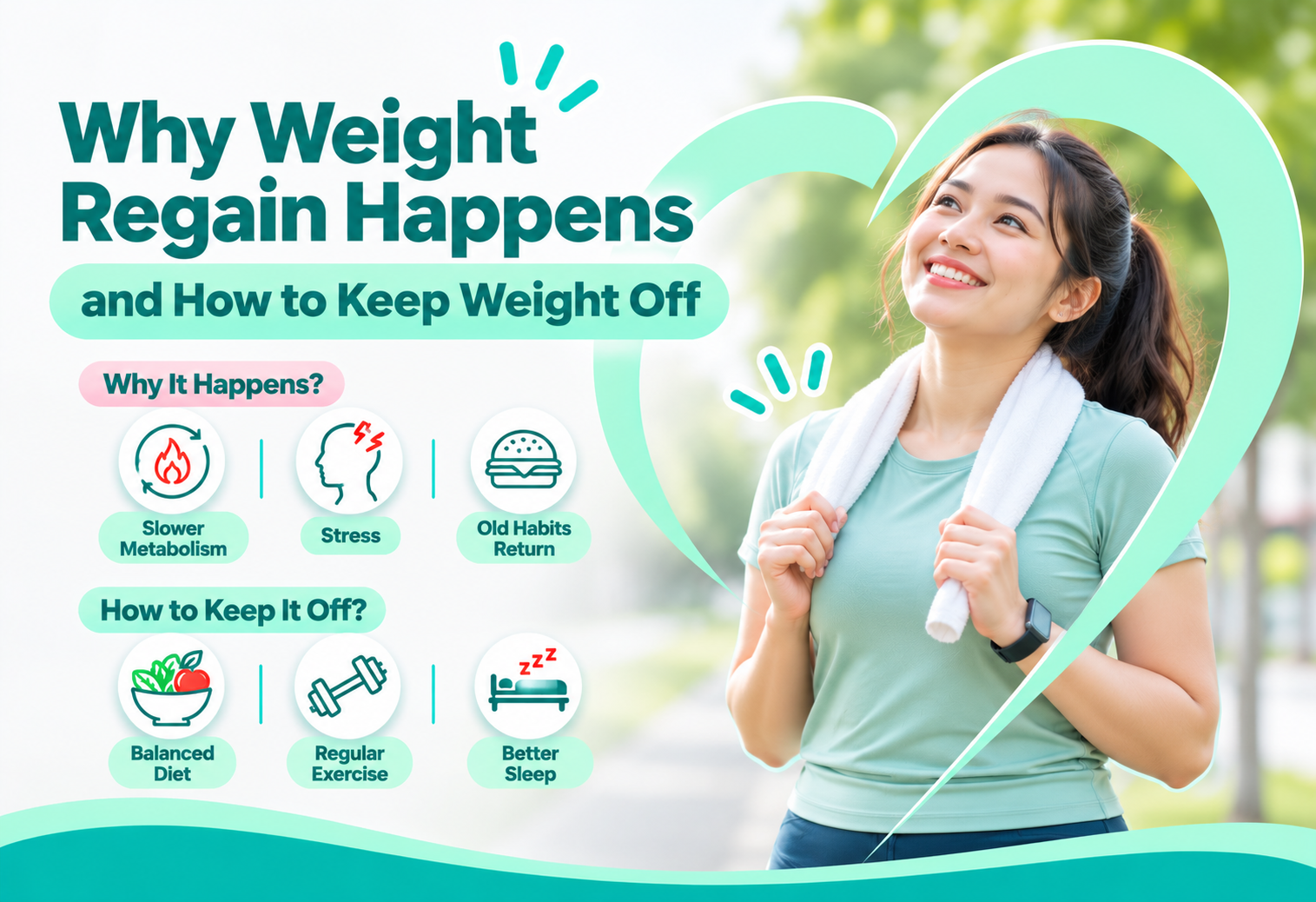
Weight regain is common and does not mean you have failed. After weight loss, the body may use less energy and appetite signals can change. Daily routines, stress, sleep, food access, medicines, and health conditions can also affect weight. A plan you can live with, regular follow-up, and early support are usually more useful than relying on willpower alone.
- Weight regain has biological, behavioural, medical, and environmental causes. It is not simply a lack of discipline.
- Long-term maintenance works best when eating and activity habits are realistic enough to continue after the initial weight-loss phase.
- Small changes in weight are normal. Look for a trend over time and respond early without punishing restrictions.
- Get professional advice if weight change is rapid or unexplained, eating feels out of control, or medicines and health conditions may be involved.
What is weight regain
Weight regain means gaining back some or all of the weight after a period of weight loss. It is sometimes called weight rebound or the yo-yo effect. A single reading does not always show true regain. Body weight can change over a few days because of fluid intake, dietary intake, stress, the menstrual cycle, and physical activity. [1] A pattern that continues for several weeks is more informative than one number.
For people living with obesity, the World Health Organization describes obesity as a chronic, relapsing disease influenced by genetics, neurobiology, eating behaviour, access to healthy food, and the wider environment. [2] That is why ongoing care may be needed, just as it is for other long-term health conditions.
Why weight can return after weight loss
The body adapts after weight loss
At a lower body weight, the body generally needs less energy than it did before. Weight loss can also affect hormones and appetite signals. When you lose weight, your metabolism slows down and you might lose some muscle. This causes your body to produce higher levels of ghrelin, the hunger hormone and can make hunger more noticeable and maintenance harder. [3] This is a biological response, not proof that someone lacks motivation.
The original plan may be too restrictive
A plan built around severe restriction, a very narrow food list, or products that are difficult to keep buying often ends when the diet ends. When you decrease your caloric intake to lose weight, your metabolic rate decreases too. Therefore when you set an overly restrictive diet, your decreased metabolic rate makes it more difficult to burn calories and lose weight. A lower metabolic rate likely makes it easier to regain weight if you return to earlier portions and eating patterns. [4] A safer long-term plan should suit your food preferences, culture, budget, schedule, and health needs.
Routines and surroundings change [5]
Long workdays, travel, caregiving, celebrations, limited food choices, and fewer opportunities to move can disrupt a routine. The surrounding environment matters. Healthy choices are harder when suitable food, safe places to be active, time, or support are limited.
Stress, sleep and emotions can affect eating [5]
Stress, low mood, boredom, and poor sleep can change appetite, food choices, and the energy available for planning meals or activity. Many people feel stress in their daily lives. Stress can cause you to overeat, feel tired, and not want to be active. Emotional eating is not a character flaw,it is a cue to identify triggers and build other coping options. Healthy eating and regular physical activity may help offset the effects of stress. If the stress and emotions are too difficult to cope with, seek professional help.
Medicines and health conditions may play a part [5]
Some medicines and health conditions can affect appetite, energy use, fluid balance, or activity. Do not stop or change a prescribed medicine because of weight change. Seek help from a healthcare professional to review possible contributors and the safest next step.
How to reduce the chance of weight regain
There is no single maintenance diet that suits everyone. The useful question is whether the plan is nutritionally sound, safe for your health, and realistic on an ordinary week.
- Choose an eating pattern you can repeat. Use familiar foods and regular meals that help you avoid becoming overly hungry. Malaysia's Quarter Quarter Half plate is one practical guide: fill about one quarter of the plate with grains or other carbohydrate foods, one quarter with protein foods, and half with vegetables and fruit. Choose water or an unsweetened drink. [6]
- Keep some structure when life gets busy. Plan a few reliable meals, snacks if needed, and options for eating out. Meal planning helps you to stay on track even when life gets busy. Aim for consistency, not perfection.
- Stay active in a way your body can manage. Regular aerobic and muscle-strengthening activity supports health and can help with weight maintenance. You can start with 30 minutes of moderate-intensity physical activity such as cycling and brisk walking 5 times a week; build up your physical activity routine gradually. [5] Some people should check with a healthcare professional before increasing activity to prevent injuries or straining.
- Monitor trends without turning every number into a verdict. A regular check of body composition, waist measurement, meal patterns, sleep, or activity can reveal a change early. Choose measures that help you act and do not worsen anxiety or disordered eating.
- Protect sleep and plan for stress. Keep a fairly regular sleep schedule where possible. Identify non-food ways to manage stress, such as a walk, a brief breathing exercise, talking with someone, or professional support. [5]
- Use support before you feel stuck. Seek for professional help to review barriers and make your weight loss plan more practical. [5]
Be cautious with quick fix weight loss plans
A diet or programme deserves a closer look if it promises very fast results, claims you can lose weight without changing food or activity, requires unproven supplements, removes several food groups without a medical reason, or has no maintenance plan. Ask how the programme handles safety, follow-up, medicines, side effects, and weight regain. [7]
Prescription weight-management medicines and bariatric procedures can be appropriate for some people who experience high medical risks due to chronic obesity, but they require assessment and follow-up by a qualified healthcare professional. [8]
When to speak with a healthcare professional
- Your weight changes rapidly or without a clear reason.
- You have swelling, shortness of breath, severe fatigue, persistent pain, or another new symptom.
- Eating feels out of control, you binge, purge, skip meals to compensate, or thoughts about food and weight are causing distress.
- You have diabetes, high blood pressure, kidney disease, heart disease, or another condition affected by changes in food or activity.
- You are pregnant, breastfeeding, under 18, an older adult at risk of muscle loss, or recovering from illness or surgery.
- You are considering weight-management medicine, supplements, meal replacements, or a very-low-calorie plan.
Speak with a CARiNG pharmacist
Still feeling lost? Drop by your nearest CARiNG Pharmacy to learn about healthy weight loss and the long-term benefits it brings.
Medical disclaimer: This article is for general health education and does not diagnose a condition or replace advice from a qualified healthcare professional. Do not start, stop, or change prescribed medicines based on this information. Seek urgent medical care for severe or rapidly worsening symptoms.
Frequently asked questions about weight regain after weight loss
Is it normal to regain some weight after losing it?
It is common. The body adapts to weight loss, and routines can change over time. Regain is not inevitable, but maintenance often needs an ongoing plan and support rather than a short diet followed by a return to earlier habits. [5]
Do I need to avoid rice or carbohydrates to keep weight off?
No single macronutrient split works for everyone. Rice and other carbohydrate foods can fit into a balanced eating pattern. Portion, food quality, the overall meal, health conditions, and whether the plan is sustainable matter more than banning one food group. Malaysia's Quarter Quarter Half plate is one practical guide: fill about one quarter of the plate with grains or other carbohydrate foods, one quarter with protein foods, and half with vegetables and fruit. [6]
Can supplements prevent weight regain?
No supplement can guarantee weight maintenance. The basis of healthy weight loss and maintenance requires proper dietary habits and physical exercise. [5] If you plan to incorporate weight loss supplements in your weight loss routine as an adjunct, speak to a healthcare professional especially if you have a health condition, take regular medicines, or are pregnant or breastfeeding.
View references 8 sources
- Cleveland Clinic. 7 possible reasons why your weight fluctuates. Cleveland (OH): Cleveland Clinic; 26 July 2024. Cited 29 October 2026. Source
- World Health Organization. Obesity and overweight. Geneva: World Health Organization; 7 October 2026. Cited 29 October 2026. Source
- Hendley J. Calorie deficit explained: is it a safe, sustainable approach to weight loss? Boston (MA): Harvard Health Publishing; 19 October 2026. Cited 29 October 2026. Source
- Stanford Health Care. Weight loss maintenance. Stanford (CA): Stanford Health Care. Cited 29 October 2026. Source
- National Institute of Diabetes and Digestive and Kidney Diseases. Health tips for adults. Bethesda (MD): National Institute of Diabetes and Digestive and Kidney Diseases; September 2020. Cited 29 October 2026. Source
- Ministry of Health Malaysia. Pinggan Sihat Malaysia: suku-suku separuh. Putrajaya: Ministry of Health Malaysia. Cited May 2026. Source
- National Institute of Diabetes and Digestive and Kidney Diseases. Choosing a safe and successful weight-loss program. Bethesda (MD): National Institute of Diabetes and Digestive and Kidney Diseases; February 2024. Cited 29 October 2026. Source
- Thode JB. How weight-loss medications and bariatric surgery can work together. Philadelphia (PA): Penn Medicine; 20 November 2023. Cited 29 October 2026. Source
Related Health Info
Latest Health Info

Life After Cancer Survivorship and Support
The short answer Life after cancer treatment may bring relief and hope, but it can also involve uncertainty and a ...
Why Weight Regain Happens and How to Keep Weight Off
The short answer Weight regain is common and does not mean you have failed. After weight loss, the body may ...
Reasons for Not Losing Weight: Why the Scale May Be Stuck
The short answer Weight loss can slow or stall even when you are making positive changes. Common reasons include an ...