
- Home
- Health Center
- Health Info
- 8 Protein Facts: What Protein Does, How Much You Need and the Best Sources
8 Protein Facts: What Protein Does, How Much You Need and the Best Sources
Written By Ms. Law Jia Yi
Registered Pharmacist
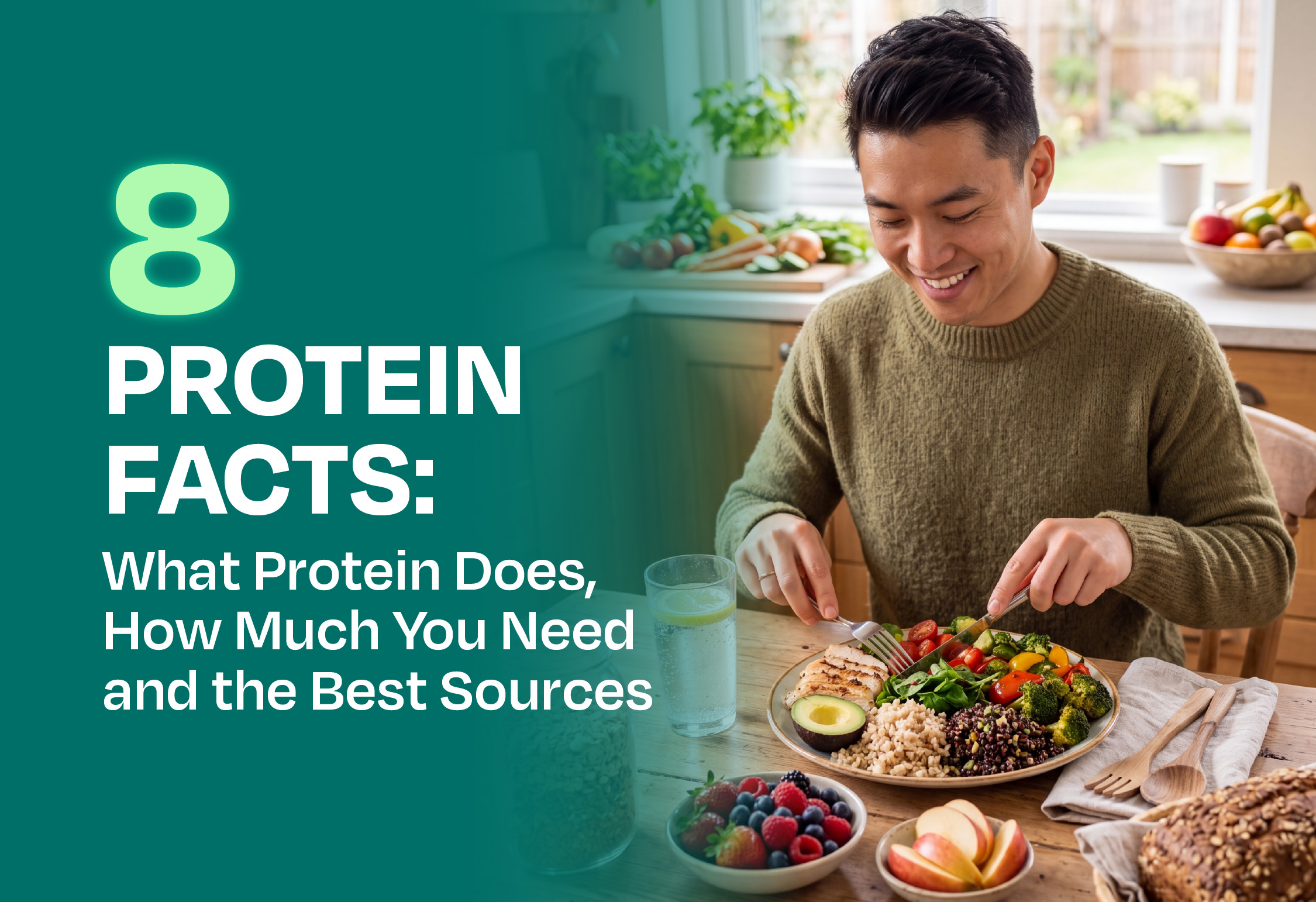
Protein is a nutrient your body uses to build and repair tissues and to make important molecules such as enzymes, hormones and antibodies. Protein is needed daily, with optimal intake should be tailored to individual needs, activity levels, and physiological conditions. [1, 3]
Protein gets plenty of attention, especially in conversations about muscle, weight management and sports nutrition. But the basics are simpler than the hype: focus first on meeting your needs with a variety of nutritious foods, then consider supplements to help address nutritional gaps when adequate protein intake cannot be achieved through diet alone. [3, 7]
Protein is made from amino acids
Amino acids are the building blocks of protein. The body can make some non-essential amino acids on its own, while nine are considered essential because they must come from food: histidine, isoleucine, leucine, lysine, methionine, phenylalanine, threonine, tryptophan and valine. [1, 3]
You do not need to memorise the list. Eating enough protein from a varied diet is the practical way to obtain the amino acids your body needs.
“Complete” and “incomplete” protein is a useful shortcut — but not the whole story
Complete proteins are food sources that provide all nine essential amino acids in adequate proportions. They include animal-based foods such as eggs, milk, fish, and meat, as well as plant-based sources such as soy and quinoa. Some plant proteins are lower in one or more essential amino acids, which is why eating a varied diet that includes legumes, tofu and tempeh, nuts and seeds, whole grains, and peas throughout the day can help meet protein needs. [1, 3]
Complementary proteins do not need to be combined at every meal, as long as the overall diet is varied and adequate.
Too little protein can affect strength, healing and nutritional status
Severe protein-energy malnutrition can cause muscle wasting and conditions such as marasmus or kwashiorkor, especially where overall food intake is inadequate. In everyday practice, people who are older, unwell, recovering from illness, eating very little, or following highly restrictive diets may need extra attention to protein intake. [1]
Being vegetarian does not automatically mean a person is protein deficient. Vegetarian and vegan diets can provide enough protein when they include a good variety of legumes, soy foods, nuts, seeds and grains. [3]
How much protein do you need each day?
There is no single number that fits everyone. International adult reference values are around 0.8–0.83 g of protein per kilogram of body weight per day for generally healthy adults, while Malaysia’s Recommended Nutrient Intakes (RNI) provide age- and sex-specific daily targets. [2, 3]
Your needs may be higher during growth, pregnancy, breastfeeding, regular athletic training, recovery from illness or in certain medical conditions. If you have kidney disease or another condition that affects nutrition, your protein target should be individualised with a healthcare professional or dietitian. [6]
Quick example: At 0.8 g/kg/day, a 60 kg adult would need about 48 g of protein daily, while a 75 kg adult would need about 60 g. This is only a general reference, not a personalised prescription. [3]
Athletes often need more protein — but timing is not everything
For many healthy exercising adults, sports-nutrition guidance suggests around 1.4–2.0 g/kg/day can support training adaptation and muscle maintenance or gain. The total amount of protein consumed throughout the day is more important than focusing on the precise timing of protein intake. [4]
Protein before or after resistance exercise can both support muscle protein synthesis. Practical food options include milk or yoghurt, eggs, fish, chicken, tofu, tempeh, soy milk, beans or a suitable protein shake when food is inconvenient. [4]
Pregnancy increases protein needs, especially later in pregnancy
Malaysia’s RNI recommends extra protein during pregnancy because maternal and fetal tissues are growing. The additional intake is approximately +0.5 g/day in the first trimester, +8 g/day in the second trimester and +25 g/day in the third trimester. [2]
These extra needs should generally come from normal food rather than high-protein supplements. If protein needs cannot be met through diet alone, consult a healthcare professional before considering high-protein supplements routinely during pregnancy. [2, 5]
Protein powder as a convenient supplement
Whey, casein and pea protein are common powder options. They can make it easier to reach a protein target when appetite, schedule, training or dietary preferences make food less convenient. Protein powders can be an easy way to increase protein intake when needed. However, do note that they may lack fibre, vitamins, minerals and other nutrients found in whole foods, so they should complement rather than replace a varied diet. [1, 7]
If you choose a protein powder, check the serving size, protein amount, added sugar and other ingredients. People who are pregnant, have kidney disease, take medicines or have food allergies should check with a healthcare professional before using supplements regularly. [5, 6, 7]
What are healthy protein foods?
A balanced diet can include protein from both animal and plant sources. Choose a variety, and pay attention to the “protein package” — the saturated fat, sodium, fibre and other nutrients that come with the food. [3]
- Fish and seafood
- Eggs
- Milk, yoghurt and other dairy foods
- Chicken or other lean meats
- Tofu, tempeh and edamame
- Beans, lentils and chickpeas
- Nuts and seeds
- Whole grains such as oats or quinoa
Simple tip: Instead of trying to “load” all your protein at dinner, include a protein food at breakfast, lunch, dinner and snacks when appropriate. This can make it easier to meet your daily needs without oversized portions.
When should you speak with a healthcare professional?
Ask a doctor, dietitian or pharmacist for personalised advice if you have kidney disease, liver disease, unexplained weight or muscle loss, poor appetite, difficulty swallowing, pregnancy-related nutrition concerns, or if you are planning a very high-protein diet or frequent supplement use. [5, 6]
Speak with a CARiNG pharmacist
If you are considering a protein supplement or are unsure whether your diet is meeting your protein needs, speak with a CARiNG pharmacist. A pharmacist can help you review supplement ingredients, consider your medicines and health conditions, and advise when personalised nutrition or medical assessment may be appropriate.
Find your nearest CARiNG Pharmacy →Useful resources
- Ministry of Health Malaysia – Recommended Nutrient Intakes for Malaysia – Malaysia-specific nutrient reference values, including protein needs.
- World Health Organization – Healthy Diet – Guidance on building a balanced and varied diet.
- World Health Organization – High-Protein Supplementation During Pregnancy – Guidance relating to routine high-protein supplementation in pregnancy.
- NIDDK – Healthy Eating for Adults With Chronic Kidney Disease – Information on individualising protein intake for people with kidney disease.
- Cambridge University Hospitals – High Protein Diet – Practical information about increasing protein intake when needed.
Medical disclaimer: This article is for general health education and is not a substitute for medical advice, diagnosis or treatment. Individual protein needs vary. Seek advice from a qualified healthcare professional for concerns about your diet, health conditions or medicines.
Frequently asked questions about protein
How much protein do I need per day?
What foods are highest in protein?
Fish, poultry, eggs, dairy foods, soy foods, beans, lentils, nuts and seeds are useful protein sources. The healthiest choice also depends on what comes with the protein, such as saturated fat, sodium, fibre and micronutrients. [3]
Do vegetarians get enough protein?
Yes, they can. A varied plant-based diet that includes legumes, soy foods, nuts, seeds and grains can provide enough protein and all essential amino acids across the day. [3]
Do I need protein immediately after exercise?
Not necessarily. Protein intake around the time of resistance exercise can help, but your total daily intake is more important to help with muscle recovery. [4]
Is protein powder better than food?
No. Protein powder can be a convenient option for those who are unable to meet their protein requirements through diet alone. However, it should complement whole-food sources, which provide other essential nutrients that protein powders may not contain. [7]
Can too much protein be harmful?
For certain individuals, consuming more protein is not necessarily better and should be tailored to their individual needs and health status. People with chronic kidney disease may need a carefully individualised protein intake, and requirements can change with dialysis or other treatment. If you have kidney disease or plan a very high-protein diet, seek professional advice. [6]
View references 7 sources
- CARiNG Pharmacy. 8 Quick Protein Facts. Malaysia: CARiNG Pharmacy; [cited 16 August 2026]. Source
- Ministry of Health Malaysia, National Coordinating Committee on Food and Nutrition. Recommended Nutrient Intakes for Malaysia (RNI) 2017. Putrajaya: Ministry of Health Malaysia; 2017 [cited 16 August 2026]. Source
- World Health Organization. Healthy diet. Geneva: World Health Organization; 2026 [cited 16 August 2026]. Source
- Jäger R, Kerksick CM, Campbell BI, Cribb PJ, Wells SD, Skwiat TM, et al. International Society of Sports Nutrition position stand: protein and exercise. J Int Soc Sports Nutr. 2017;14:20 [cited 16 August 2026]. Source
- World Health Organization. High-protein supplementation during pregnancy. Geneva: World Health Organization; 9 August 2023 [cited 16 August 2026]. Source
- National Institute of Diabetes and Digestive and Kidney Diseases. Healthy eating for adults with chronic kidney disease. Bethesda (MD): National Institute of Diabetes and Digestive and Kidney Diseases; [cited 16 August 2026]. Source
- Cambridge University Hospitals NHS Foundation Trust. High protein diet. Cambridge: Cambridge University Hospitals NHS Foundation Trust; 19 December 2025 [cited 16 August 2026]. Source
Related Health Info
Latest Health Info
8 Protein Facts: What Protein Does, How Much You Need and the Best Sources
Summary Protein is a nutrient your body uses to build and repair tissues and to make important molecules such as ...

5 Tips for Healthy Weight Management
The quick answer A healthy weight is best supported by habits you can maintain: eat more fibre-rich minimally processed foods, ...

Joint Health and Aging: Tips for Staying Active as You Get Older
Key takeaways Quick answer: Staying active is an important way to support joint function and independence as you get older. ...