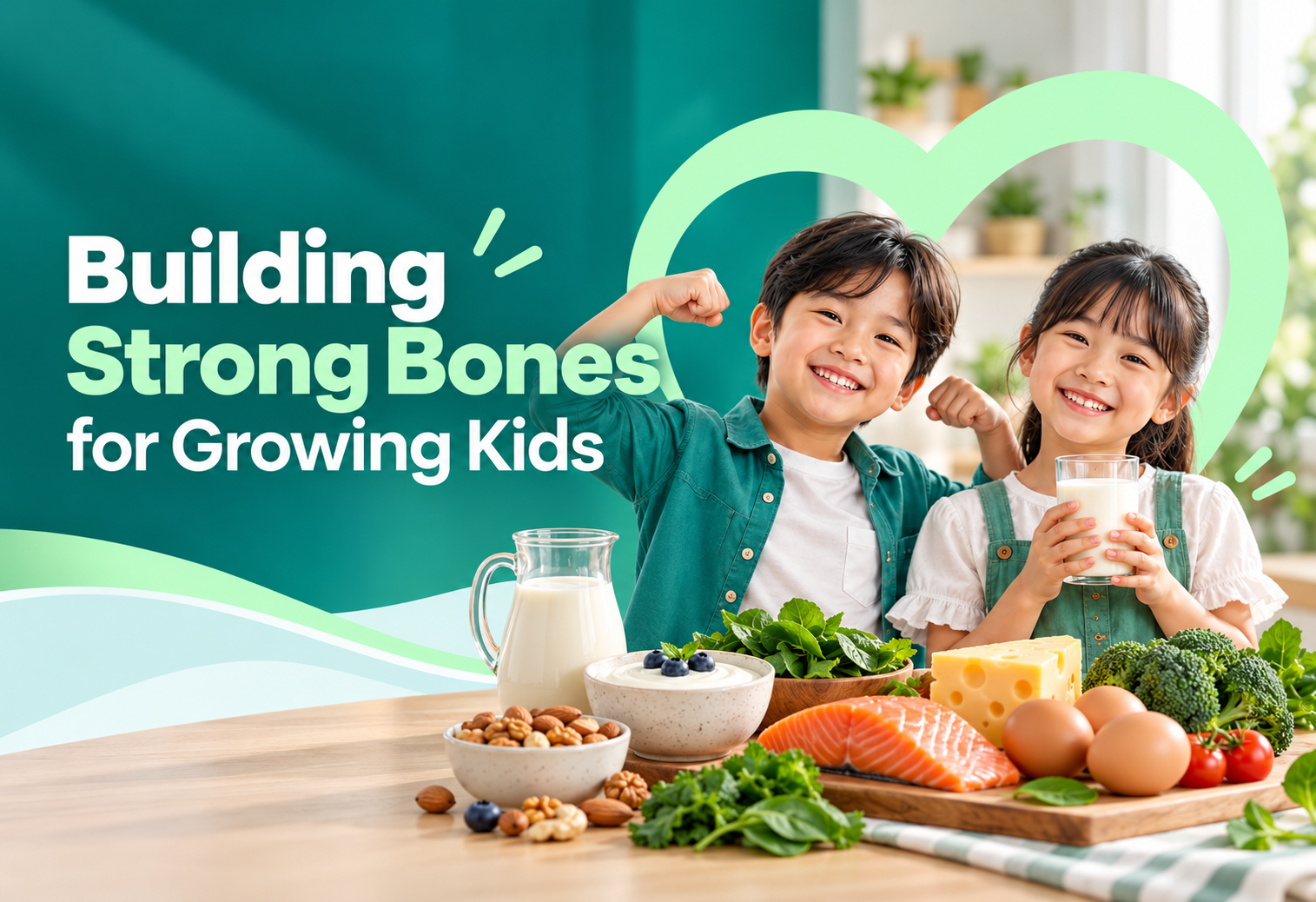
Vitamin D is an important nutrient that supports children’s growth and overall health. It helps the body absorb calcium and phosphorus, which are essential for building strong bones. Vitamin D also supports muscle function and plays an important role in the immune system [1,6]. Despite its importance, vitamin D deficiency remains common among children worldwide, largely due to limited sun exposure, low dietary intake, and increased needs during growth [1]. In Malaysia, the estimated prevalence of vitamin D deficiency among children is around 47.5% [2]. Improving awareness of vitamin D can help parents and caregivers support children’s long-term health.
Why Vitamin D Is Important for Growing Children
One of vitamin D’s main roles is to help the gut absorb calcium from food. Without enough vitamin D, the body cannot absorb calcium efficiently, even if a child’s diet contains adequate calcium [1,3]. This can interfere with normal bone development, particularly during infancy, childhood, and adolescence, when bones are growing rapidly [4].
Vitamin D also supports healthy muscle function, which is important for movement, strength, and balance [5]. Low vitamin D levels have been linked with a higher risk of infections in children [6]. Overall, having sufficient vitamin D helps support healthy growth, physical strength, and immune function during childhood.
How Weak Bones Can Affect Long-Term Growth
When vitamin D levels are very low, children can develop rickets, a condition in which bones become soft and weak. Children with rickets may experience bone pain, muscle weakness, delayed motor skills, and visible bone deformities such as bowed legs [7]. These problems can occur because bones are not properly mineralised during periods of growth [8].
Children with low vitamin D levels often have lower bone mineral density, meaning their bones are less dense and potentially weaker. This can prevent children from reaching their optimal “peak bone mass,” defined as the maximum bone strength achieved by early adulthood. Reaching a good peak bone mass is important because it helps reduce the risk of fractures later in life [9].
Sources of Vitamin D for Children
Children obtain vitamin D from three main sources: sunlight, food, and supplements [10].
Sunlight:
Vitamin D is produced in the skin when it is exposed to sunlight. However, the amount produced depends on several factors, including time spent outdoors, clothing, skin tone, season, and geographic location. Due to this variability, sunlight alone may not provide sufficient vitamin D for many children throughout the year [8].
Diet:
Only a limited number of foods naturally contain vitamin D, such as oily fish, egg yolks, and liver. In some countries, foods such as milk or cereals are fortified with vitamin D. However, diet alone may not provide enough vitamin D for children, particularly those with limited food choices [1,8].
Supplements:
Vitamin D supplements are recommended as they help to reduce the likelihood of deficiency. Supplementation can improve markers of bone health and may improve bone density in children with low vitamin D levels [1,10]. Pharmacists can advise parents on suitable products and their appropriate use.
Conclusion
Vitamin D is essential for healthy bones, normal growth, and immune support in children. Low vitamin D levels can weaken bones, slow development, and increase the risk of future bone problems. Visit your nearest CARiNG Pharmacy for guidance on vitamin D supplementation for children.